AliExpress Delivery Time Calculator: Shipping Estimates by Country (2026)
AliExpress Delivery Time Calculator: Shipping Estimates by Country (2026)
Quick answer: AliExpress delivery time = processing time (1–3 days) + shipping transit + customs clearance (1–5 days). Standard Shipping takes 15–35 days to most Western countries; Premium Shipping 7–15 days; DHL Express 3–7 days. The most accurate estimate for any specific product is the "estimated delivery" date shown at checkout, which factors in the supplier's real processing speed and live carrier data. AliShopping Tools surfaces seller-specific delivery estimates and supplier reliability scores on any AliExpress listing.
When a customer emails asking where their order is, the worst position to be in is not knowing yourself.
AliExpress delivery times have always been a moving target — different suppliers, different shipping methods, different destination countries, different seasons, and wildly inconsistent processing speeds from seller to seller. Dropshippers who ignore this complexity and promise flat "10–15 day" delivery windows end up with disputes, chargebacks, and one-star reviews.
This guide gives you the actual numbers. You will get shipping time estimates by country and method, the formula for calculating realistic delivery windows before you source a product, and the specific signals that tell you whether a given supplier will actually ship on schedule.
How to Estimate AliExpress Delivery Time
There is no single "AliExpress delivery time" because the platform carries millions of products from hundreds of thousands of sellers shipping to every country on earth. But there is a reliable formula that covers almost every order.
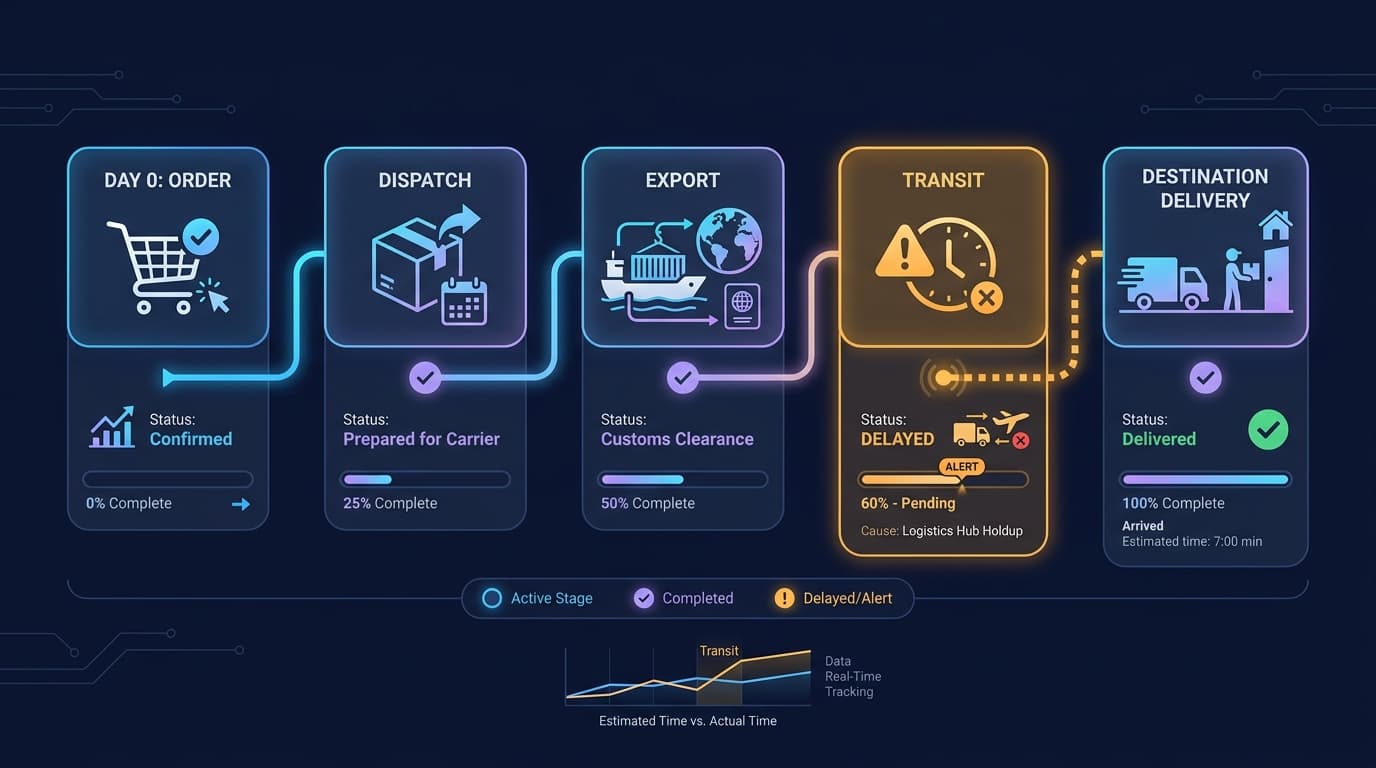
Delivery time = Processing time + Shipping time + Customs clearance
Each variable breaks down like this:
Processing time (1–3 days, sometimes up to 7): This is the time between payment confirmation and the seller handing the package to the carrier. Most reputable sellers process orders within 1–2 business days. Some list a "dispatch time" in their store settings — that number is the most honest estimate of processing speed. If a seller consistently ships next-day, their processing time is effectively zero. If they batch ship weekly, add 5–7 days before transit even begins.
Shipping time by method: This is the largest variable and it depends entirely on which shipping option you or your customer selects. AliExpress Standard Shipping is the default for most affordable products. AliExpress Premium Shipping costs more and uses faster routing. Cainiao Super Economy is the cheapest option and the slowest. DHL Express and FedEx are the fastest but often add $15–40 to order cost.
Customs clearance (1–5 days): Packages do not land at the destination and immediately appear on doorsteps. They enter customs, get scanned, and either clear quickly or sit in a queue. For most Western countries, clearance takes 1–3 business days on routine shipments. Delays spike during peak seasons, during customs audits on certain product categories, and for shipments that require additional documentation (batteries, liquids, regulated items).
The most accurate single estimate available is the "Estimated Delivery" date AliExpress shows on the product page and at checkout. This date is calculated from actual carrier performance data for your specific destination and the individual supplier's historical processing speed. It is a better starting point than any generic table.
That said, estimates assume normal conditions. They do not account for Chinese public holidays (Spring Festival in January/February shuts logistics for 2–4 weeks), customs backlogs at busy ports, or a seller who marks items dispatched before actually shipping them.
AliExpress Shipping Times by Country (2026 Table)
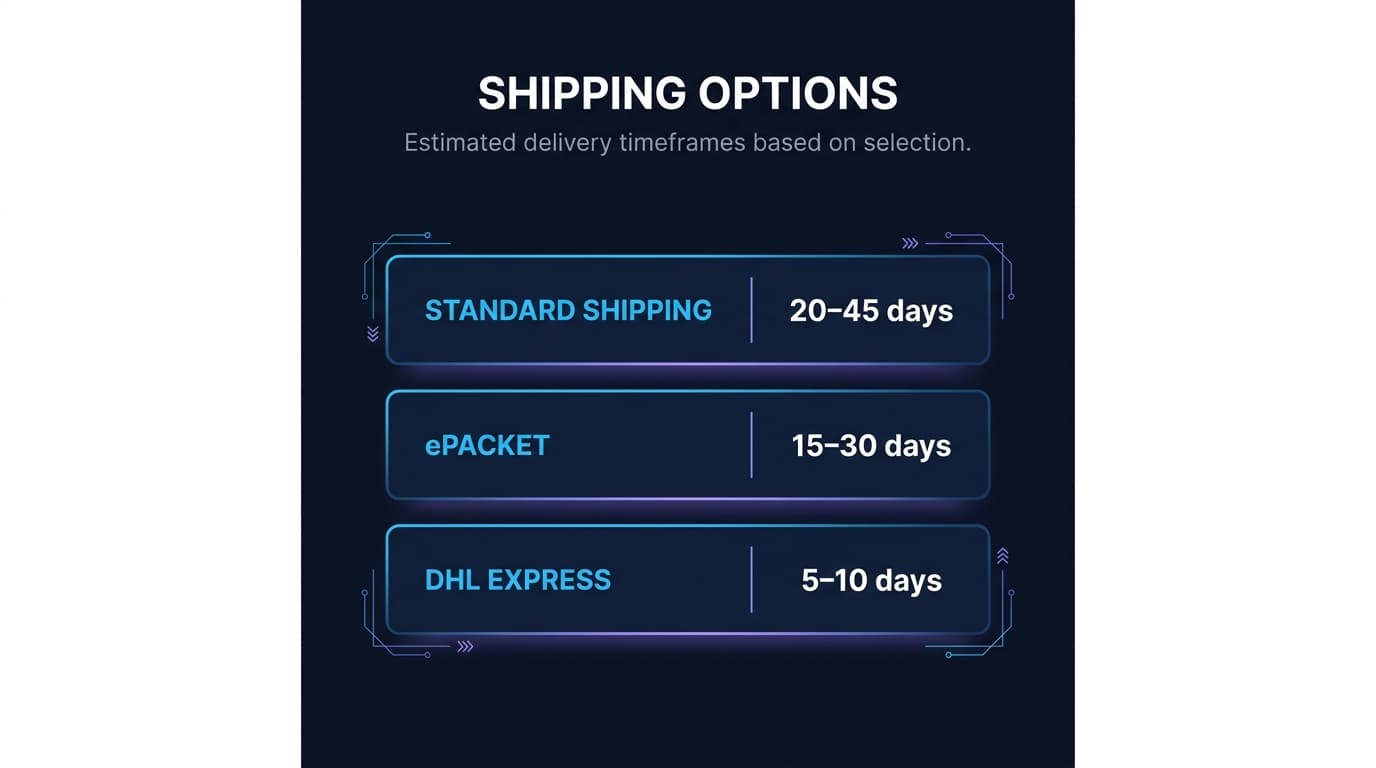
The table below shows typical transit times only — processing time (1–3 days) and customs clearance (1–5 days) are not included. Add those to get your full delivery window.
| Country | AliExpress Standard | AliExpress Premium | Cainiao Super Economy | DHL Express | FedEx |
|---|---|---|---|---|---|
| USA | 15–35 days | 7–15 days | 25–50 days | 3–7 days | 3–7 days |
| Canada | 20–40 days | 10–20 days | 30–55 days | 4–8 days | 4–8 days |
| UK | 15–30 days | 7–15 days | 25–45 days | 3–6 days | 3–6 days |
| Australia | 20–40 days | 10–20 days | 30–55 days | 4–8 days | 4–8 days |
| Germany | 15–30 days | 7–15 days | 25–45 days | 3–6 days | 3–6 days |
| France | 15–35 days | 8–18 days | 28–50 days | 3–7 days | 3–7 days |
| Brazil | 30–60 days | 20–40 days | 45–75 days | 7–14 days | 7–14 days |
| Mexico | 25–50 days | 15–30 days | 40–65 days | 5–10 days | 5–10 days |
| South Korea | 10–20 days | 5–10 days | 20–35 days | 2–5 days | 2–5 days |
| Japan | 10–20 days | 5–10 days | 20–35 days | 2–5 days | 2–5 days |
| India | 20–40 days | 12–25 days | 35–60 days | 5–10 days | 5–10 days |
Brazil and Mexico show the widest ranges because customs processing in both countries is significantly slower and more variable than European or North American destinations. Dropshippers targeting Brazil in particular should build an extra 10–15 days of buffer into any delivery promise.
South Korea and Japan benefit from geographic proximity to China and generally efficient customs handling — these are the fastest non-express destinations in the table.
AliExpress Shipping Method Comparison
Choosing the right shipping method is a sourcing decision, not just a logistics detail. It affects your profit margin, your customer satisfaction score, and your refund rate.
AliExpress Standard Shipping is the default for most products under $50. It uses a hybrid carrier model — China Post or a third-party consolidator handles the origin leg, then the package transfers to the destination country's national postal service (USPS, Royal Mail, Deutsche Post, etc.) for last-mile delivery. Tracking is usually available but can go dark for days during the international transit leg. Good for low-cost products where the customer is price-sensitive and willing to wait.
AliExpress Premium Shipping uses faster routing, typically through carriers like Yanwen, Yun Express, or direct agreements with destination postal networks. It is meaningfully faster than Standard — roughly half the transit time — and tracking tends to be more consistent. For products priced $15–50, the extra $2–5 shipping cost is often worth the lower dispute rate.
Cainiao Super Economy is Alibaba's logistics arm operating at the lowest cost tier. It is the right choice only when price is the single deciding factor. Tracking is sparse, transit times are long, and customer experience suffers. Not recommended for dropshipping stores with any focus on reviews or repeat buyers.
DHL Express and FedEx are the gold standard for speed and tracking reliability. Door-to-door tracking updates every few hours. Transit times are measured in days, not weeks. The trade-off is cost: $15–40 per shipment depending on weight and destination. Viable for high-margin products ($80+) where delivery speed is part of the value proposition. Some suppliers negotiate DHL rates that are significantly lower than retail — worth asking.
Why AliExpress Delivery Times Vary So Much
Two orders placed on the same day, for the same product, using the same shipping method can arrive weeks apart. This confuses buyers and creates disputes even when nothing technically went wrong.
Supplier processing speed is the most underrated variable. Some sellers ship same-day for orders placed before noon. Others batch ship twice a week. A few mark items as shipped before actually dropping them at the carrier — the tracking number appears immediately, but the package does not move for days. This single variable can swing delivery time by 7–10 days with no change in shipping method.
Chinese public holidays cause major disruptions. The Spring Festival (Chinese New Year) closes factories and logistics networks for 2–4 weeks, typically in late January or February. Many sellers pre-ship inventory, but new orders placed during the holiday will not move until operations resume. The days immediately before the holiday also see a rush that overwhelms carriers. Similar (but smaller) disruptions happen during Golden Week in October.
Customs clearance varies by product category. Electronics, health supplements, cosmetics, and items containing batteries are subject to more thorough customs inspection in most countries. A wireless charger might clear customs in a day or sit for 10 days. A fashion accessory clears almost instantly. If you are sourcing products in regulated categories, build extra clearance time into your estimates and be transparent with customers about it.
Destination country infrastructure matters. Packages destined for major metropolitan areas often clear and deliver faster than rural addresses. Brazil's customs system is notoriously slow; the UK's is generally fast. Australia's customs clears quickly but last-mile delivery to remote areas adds days. Germany clears fast; France has more variable performance at the sorting stage.
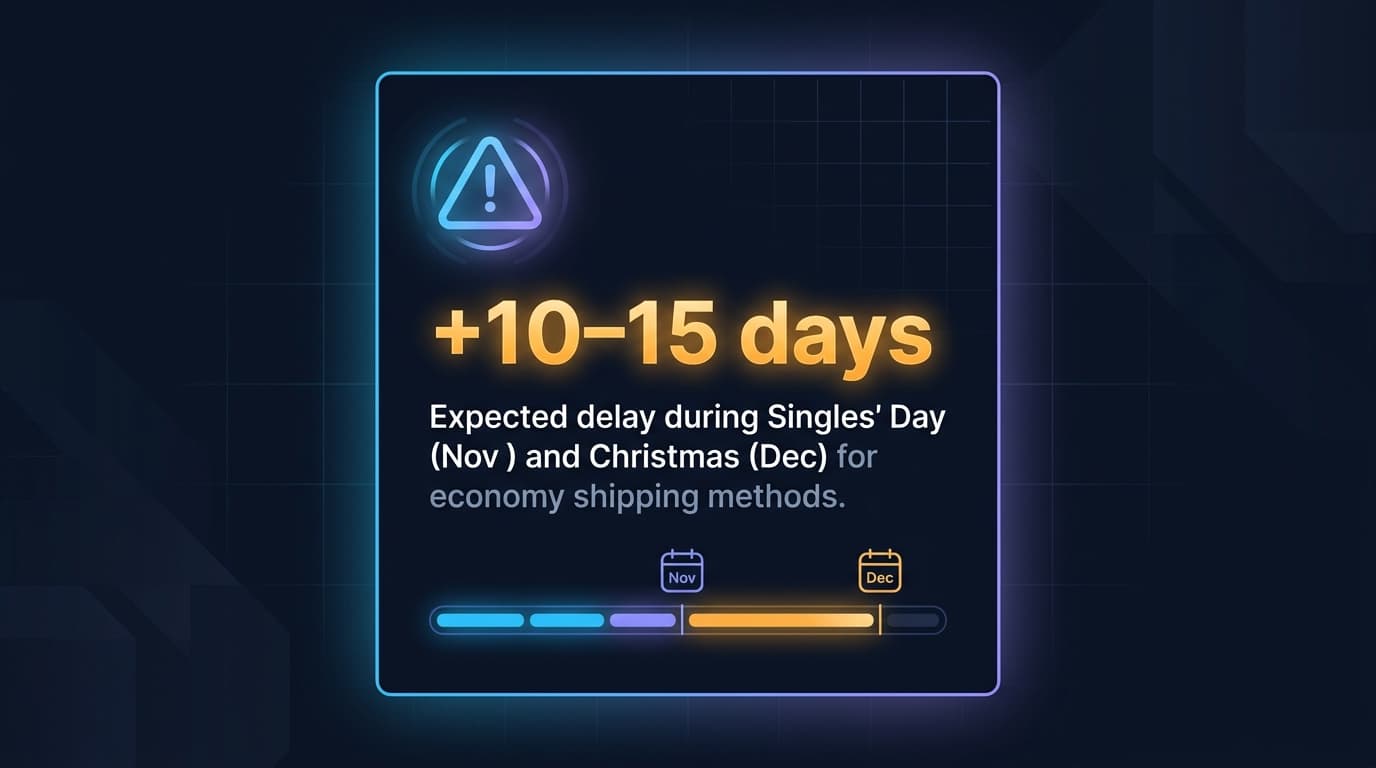
Seasonal volume spikes affect all carriers. November and December (Black Friday, Christmas) are the heaviest shipping months globally. Transit times on all methods extend by 5–15 days during peak season. Communicate this proactively to customers or adjust shipping method recommendations for Q4.
How to Track Your AliExpress Order
AliExpress provides basic tracking through the order management page (My Orders → Track Order). For most Standard Shipping orders, the carrier is China Post on the origin side, transitioning to the destination country's postal service.
17Track.net is the most comprehensive free tracking tool for AliExpress orders. Paste your tracking number and it will identify the carrier automatically and show the full transit history across carrier handoffs.
Cainiao tracking (cainiao.com) works best for orders shipped via Cainiao Super Economy — the native tracker shows more detail than third-party aggregators for that carrier network.
AfterShip is the go-to option if you are managing a dropshipping store. It aggregates tracking across all carriers and can send automated email or SMS notifications to customers. This reduces "where is my order" customer service inquiries significantly.
When tracking goes silent for more than 5 days during the international transit leg, it usually means the package is in transit between carrier handoffs — not lost. Standard Shipping packages often go dark for a week while moving through the destination country's sorting facility. If tracking shows no movement after 30 days, contact the seller before filing a dispute — many will resend or refund proactively.
How to Calculate True Delivery Time Before You Order
Before you source a product or set a delivery promise in your store, run this calculation:
-
Check the AliExpress product page for the "Estimated Delivery" date. This is your baseline. It incorporates real data for your destination and the specific supplier.
-
Add processing buffer based on the seller's dispatch time. Find this in the seller's store information or in the "Ships out within X days" note on the product listing. If it says 7 days, add 5 extra days to the AliExpress estimate — the platform's estimate sometimes assumes best-case processing.
-
Add seasonal buffer if applicable. Orders placed within two weeks of Chinese New Year or during Golden Week should add 10–21 days. Orders during November–December shipping peaks should add 5–10 days.
-
Check the supplier's reliability score. This is where most dropshippers skip a critical step. An estimated delivery date is only as good as the supplier's consistency in hitting it. A supplier with a 95% on-time dispatch rate will match the estimate closely. A supplier who regularly ships late, uses incorrect tracking numbers, or bundles orders to save on shipping will blow through the estimate regularly.
The AliShopping Tools Chrome extension shows supplier reliability scores, dispute rates, and store age directly on the AliExpress product page — the signals that tell you whether that estimated delivery date will actually be honored. It also surfaces price history so you can see whether the supplier is stable enough to build a long-term relationship around. Free, no account required, installs in 30 seconds.
- Add 3 days of customer buffer. Whatever number you arrive at, promise your customer 3 days longer. Arriving early is a pleasant surprise. Arriving late is a dispute.
The formula in practice: A product listing shows an estimated delivery of 18 days to the USA. The seller dispatches within 3 days (adds 0 extra days, already factored in). It is March, no holiday disruption. The supplier has a strong reliability score. Your store delivery promise should be 21 days — 18 days plus a 3-day buffer.
If that same product is ordered in late January during Spring Festival, your promise should be 35–40 days, and you should communicate the holiday delay proactively at checkout.
Frequently Asked Questions
Does AliExpress have an official delivery time calculator?
AliExpress does not have a standalone delivery time calculator tool. The closest equivalent is the "Estimated Delivery" date shown on each product listing and at checkout. That date is calculated from carrier performance data and supplier history for your specific location — it is more accurate than any generic calculator because it uses actual shipping data for that supplier and method.
What is the fastest AliExpress shipping method?
DHL Express and FedEx are the fastest options, typically delivering in 3–7 days to most Western countries. AliExpress Premium Shipping is the fastest affordable option at 7–15 days for most destinations.
Why does AliExpress tracking stop updating?
Tracking gaps are common during the handoff between the China-side carrier and the destination country's postal service. Packages often show no update for 5–10 days while in transit between sorting facilities. This is normal for Standard Shipping. If there is no update after 30 days, contact the seller.
How do I know if a supplier ships on time?
Check the seller's feedback score, dispute rate, and store age on the AliExpress product page. Sellers with high feedback ratings (98%+), low dispute rates, and stores older than two years tend to have more reliable shipping. AliShopping Tools surfaces this data automatically so you do not have to dig through seller profile pages manually.
The Bottom Line
AliExpress delivery time is calculable — it is not a mystery. Processing time plus shipping time by method plus customs clearance gives you a working estimate. The "Estimated Delivery" date on the product page gives you a data-backed baseline. And adding a 3-day buffer for your customer promise keeps disputes low even when conditions are slightly worse than expected.
The variable that is hardest to account for from the product page alone is supplier reliability. A supplier who consistently ships on time will match estimates reliably. A supplier who cuts corners on processing or misuses tracking numbers will blow through any estimate, no matter how accurate your formula.
Install AliShopping Tools free on the Chrome Web Store and see supplier reliability scores, price history, and risk signals on every AliExpress product page — so your delivery estimates are based on data, not optimism.
Product Tracker Free Beta
Track any AliExpress product’s real price, orders, stock & rating for 180 days. Data doesn’t lie. But discounts can.
Before you buy
Is this deal real? Check the price history before you buy.
Prices often spike just before a “sale.” See 180-day price history and fake discount detection — free, no account needed.
Verify on AliShopping Deals →Ready to find winning products?
Try AliShopping Tools — 15 free AI tools for product research.
Quick answers
Frequently Asked Questions
1How long does AliExpress shipping actually take in 2026?
Delivery time depends on shipping method and destination country.
AliExpress Standard Shipping (the default for most small parcels) typically takes 10–20 business days to the US, 8–15 days to Western Europe, 10–25 days to Australia, and 15–35 days to Southeast Asia.
Express options like AliExpress Premium Shipping or DHL/FedEx shorten this to 5–10 business days to most countries.
The post provides country-specific tables and a formula for setting accurate customer expectations.
2What is the formula dropshippers use to calculate AliExpress delivery time?
The post presents a three-part formula: processing time (typically 1–3 business days for the seller to dispatch) plus transit time by shipping method and route (from the country-specific tables) plus customs clearance buffer (add 3–7 days for US and EU customs if the order value is near or above de minimis thresholds).
The resulting range — for example, 15–28 days US via Standard Shipping — is the honest window to show customers rather than the best-case estimate.
3Which AliExpress shipping methods are fastest for the US market?
For US customers, the fastest options are: AliExpress Premium Shipping (5–10 business days, uses YunExpress or similar consolidated express), DHL Express (3–7 business days, higher cost), and AliExpress US Local Warehouse if the seller has US stock (2–5 business days, same as domestic shipping).
Standard Shipping is the slowest reliable option at 10–20 business days. ePacket, once popular, is now less common after routing changes.
4How does the 2025 US de minimis change affect AliExpress shipping times?
The removal of the $800 de minimis exemption for Chinese-origin goods that took effect in May 2025 added customs processing time to virtually all AliExpress packages entering the US.
Orders that previously cleared automatically now require formal customs entry, adding anywhere from 3–10 extra days depending on CBP processing queue and whether the package is selected for inspection.
The post's delivery calculator includes a US-specific de minimis buffer for orders shipped after May 2025.
5Can I speed up AliExpress delivery for my customers?
Three practical approaches:
- 1filter suppliers to those offering US or EU local warehouse fulfillment (AliExpress shows 'ships from [country]' on the product listing — this gives domestic delivery speeds);
- 2select express shipping methods at order time (adds $3–15 to cost but shortens delivery to 5–10 days);
- 3source products from AliExpress suppliers who already have freight-forwarded inventory closer to your primary customer geography. The post recommends the local warehouse filter as the highest-ROI option for customer satisfaction.
6Why does the AliExpress estimated delivery date sometimes differ from the actual arrival date?
The estimated delivery date can differ because it assumes ideal processing, carrier performance, and customs flow, but real‑world variables often deviate.
AliExpress processing usually takes 1–3 days, but a slow supplier may need up to 5 days.
Carrier delays add ±2–4 days, especially on standard routes.
Customs clearance in most countries ranges from 1–5 days, but inspections can push it to a week.
When any of these steps exceed the baseline, the final arrival shifts later than the estimate.
AliShopping Tools shows a supplier’s reliability score, which predicts how often the estimate is honored.
7How do holiday seasons and peak shopping periods affect AliExpress shipping times in 2026?
During major holidays and peak shopping periods, AliExpress shipping times typically increase due to higher order volumes and carrier congestion — exact percentage slowdowns vary by carrier and route and are not published by AliExpress, so treat any specific figure as a rough guide only.
Standard Shipping tends to run noticeably longer than its usual window, Premium and DHL Express slow down less in relative terms, and processing time can also rise as suppliers handle larger batches.
AliExpress often updates its estimated delivery windows on checkout to reflect these seasonal shifts.
8Can I apply this delivery time formula to multiple items in a single order?
Yes — for multi-item orders, apply the longest processing time among the items and the slowest shipping method, then add the customs clearance buffer.
For example, if three products have processing times of 2, 1, and 3 days, use the maximum of 3 days.
Add the shipping method window — Standard (15–35 days) or Premium (7–15 days) — plus the typical customs buffer of 1–5 days.
That gives a combined estimate of roughly 19–43 days for Standard Shipping or 11–23 days for Premium.
Note AliExpress itself does not expose a standalone multi-item calculator — its checkout shows a single estimated delivery date derived from its own carrier and supplier data, which this formula approximates.
9What is the typical customs clearance time for AliExpress shipments to European Union countries in 2026?
Customs clearance for EU destinations usually takes 1‑3 days, but for items flagged as restricted or high‑value, it can extend to 4‑5 days.
This window is built into the overall AliExpress delivery formula, which adds 1‑5 days of customs time to the base shipping duration.
For Standard Shipping, the total travel time of 15‑35 days already includes the average EU customs period, so you can expect most parcels to arrive within that range.
Occasionally, random inspections or paperwork issues may cause a brief delay, but the majority of EU shipments clear customs within three business days.
10How does the supplier’s reliability score on AliShopping Tools influence the likelihood of meeting the AliExpress estimated delivery date?
A supplier's reliability signals on AliShopping Tools (dispute rate, store age, and shipping consistency) help indicate whether a seller's estimated delivery date is likely to be honored.
AliShopping Tools does not publish a precise on-time-delivery percentage tied to these signals, so treat any specific number you see elsewhere as unverified — use the signals directionally (fewer disputes and a longer track record generally correlate with more reliable delivery) rather than as a guaranteed probability.
Related Articles
- AliExpress Shipping to the UK: Delivery Times, VAT & Customs (2026)shipping
- AliExpress Shipping to the USA: Delivery Times, Customs & Duty (2026)shipping
- AliExpress Shipping to Australia: Delivery Times, Customs & Tracking (2026)shipping
- AliExpress vs Alibaba for Dropshipping: Which One Should You Use in 2026?compare
- AliExpress Product Research: 2026 Guide (Tools + Checklist)products
- Does AliExpress Ship to Canada in 2026? Yes — Here's How Delivery Actually Worksmisc
More from the blog
AliExpress Shipping to the UK: Delivery Times, VAT & Customs (2026)
How long AliExpress takes to reach the UK, how 20% VAT and post-Brexit customs work, and which shipping method is fastest for UK shoppers in 2026.
AliExpress Shipping to the USA: Delivery Times, Customs & Duty (2026)
How long AliExpress takes to the USA, what import duty you pay after the 2026 de minimis change, and which shipping method is fastest. Realistic estimates.
AliExpress Shipping to Australia: Delivery Times, Customs & Tracking (2026)
Everything Australian shoppers need: how long AliExpress takes to deliver to AU (5-45 days), 10% GST rules, which promo codes work, and how to spot fake discounts before you pay.