AliExpress Price Comparison Tool: How to Find the Best Price (2026)
AliExpress Price Comparison Tool: How to Find the Best Price (2026)
Quick answer: To compare prices on AliExpress, use AliShopping Tools to find similar products from different sellers (SmartMatch) and check the 90-day price history on each listing. Search the same product title across AliExpress to surface competing sellers. For dedicated price tracking with drop alerts, AliTools is the stronger tool. No reliable automated tool compares prices across AliExpress, Temu, and other platforms — that requires manual checking.
Why Prices Vary So Much on AliExpress
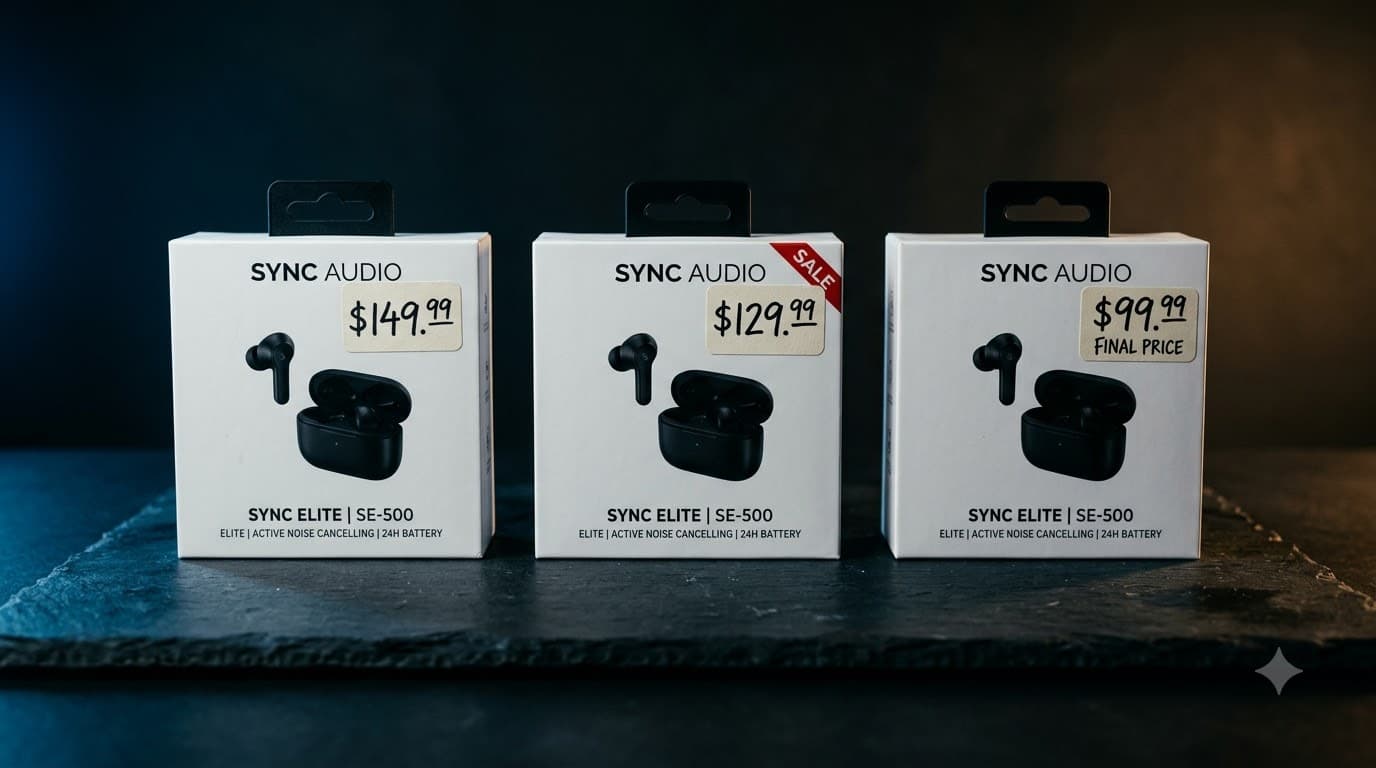
AliExpress is a marketplace, not a single store. Thousands of independent sellers list the same factory-sourced products at different prices. A phone case from the same manufacturer might cost $2.49 from one seller and $6.99 from another — same product, same factory photos, same shipping origin.
The price differences come from several factors:
Seller margin strategy. Some sellers price low and rely on volume. Others price higher and invest in listing optimization, faster shipping options, or customer service. Neither is inherently better — but the product is often identical.
Shipping cost bundling. One seller might show $3.99 with free shipping. Another shows $1.99 + $2.50 shipping. The total cost is nearly the same, but the sticker price looks very different when sorting by "lowest price."
Currency and regional pricing. AliExpress adjusts displayed prices based on your location and currency settings. The same product can show different USD-equivalent prices depending on whether you browse from the US, EU, or Southeast Asia.
"Original price" manipulation. Sellers set their own "original price" — there is no verification. A seller might show $15.99 $7.99 (50% off), while another seller lists the same item at $6.99 with no discount badge. The second seller is cheaper, but the first looks like a better deal because of the manufactured discount.
This is why price comparison matters on AliExpress more than on most platforms. You are not comparing one retailer's price against another retailer — you are comparing dozens of resellers of the same factory product.

Free Tools for AliExpress Price Comparison
Three categories of tools help with price comparison on AliExpress. Each does something different.
Similar-Product Matching (Finding the Same Item Cheaper)
AliShopping Tools includes a SmartMatch feature that surfaces similar and identical products from different AliExpress sellers. When you visit a product page with AliShopping installed, the extension's Compare tab and Similar tab show other listings for the same or visually similar items — often at lower prices from different sellers.
This is not a price tracker. It is a cross-seller comparison: "this exact wireless earbud is sold by 14 other AliExpress stores — here are their prices." The value is finding a cheaper seller for the same product without manually searching.
AliPrice / AiPrice also offers similar-product search, plus an image-based search feature. Upload a product photo, and it finds matching listings across AliExpress sellers. This is useful when you have a product image but not the exact title.
Price History Tracking (Is Today's Price Actually Low?)
AliTools is the strongest free tool for AliExpress price tracking. It shows historical price charts, and its core feature set is built around price monitoring. If price tracking is your primary need, AliTools is the most capable option.
AliShopping Tools shows a 90-day price history chart on every AliExpress product page. The chart displays the price timeline and a baseline (median) line. This tells you whether the current price is genuinely low or whether the seller inflated the "original price" before a sale event. AliShopping does not offer price drop alerts or notifications — the price history is a verification tool, not a monitoring service.
Manual Search (Always Works, Always Free)
The simplest price comparison method requires no tools at all:
- Copy the product title from any AliExpress listing.
- Paste it into the AliExpress search bar.
- Sort results by "Lowest Price" or "Orders."
- Compare total cost (item price + shipping) across the top results.
- Check seller ratings and order counts before choosing the cheapest option.
This takes 60 seconds and often surfaces sellers 20–40% cheaper than the first listing you found.

How Price History Charts Help
A price comparison is incomplete without a time dimension. Finding a seller who lists the product at $8.99 is only useful if you know whether $8.99 is the product's normal price or an inflated pre-sale price.
Price history charts solve this by showing you what the product cost over the past 30–90 days. The key data point is the baseline — the median price over the tracking window. This is the "real" price of the product, stripped of artificial discount manipulation.
How to read it:
- Current price below baseline — Genuine deal. The product is actually cheaper right now than its normal price.
- Current price at baseline — Normal price. Any "discount" badge is cosmetic.
- Current price above baseline — Inflated. The seller raised the price recently, likely in preparation for a sale event. Walk away or wait.
AliShopping Tools displays this chart automatically on every AliExpress product page after installation. No clicks needed — the chart appears in the extension's panel below the product images.
AliShopping vs AliTools vs AliPrice: Honest Comparison
Each tool has strengths. Here is what each one actually does for price comparison, without overstating:
| Feature | AliShopping Tools | AliTools | AliPrice / AiPrice |
|---|---|---|---|
| Price history chart | 90-day chart on product page | Price tracking + charts | Price tracking + charts |
| Similar product matching | SmartMatch (Compare/Similar tabs) | Limited | Image search + similar |
| Coupon auto-apply | No | Yes | No |
| Price drop alerts | No | Yes | Yes |
| Cross-platform comparison | No | No | No |
| Product scoring | Winning Score + Verdict | No | No |
| Cost | Free | Free | Free |
Where AliTools wins: Price tracking is AliTools' core identity. If you want to monitor a product over weeks and get notified when the price drops, AliTools is the better tool. It also auto-applies coupons at checkout.
Where AliShopping wins: Finding the same product from cheaper sellers (SmartMatch) and evaluating whether a product is worth buying at all (Winning Score, Verdict, review analysis). AliShopping treats price as one dimension of a purchase decision, not the only one.
Where AliPrice wins: Image-based product search. If you have a photo of a product (from Instagram, TikTok, or another marketplace) and want to find it on AliExpress, AliPrice's reverse image search is effective.
No tool currently offers automated cross-platform price comparison (AliExpress vs Temu vs Amazon vs 1688). This does not exist as a reliable product.

Step-by-Step: Compare Prices on Any AliExpress Product
Here is a practical workflow that combines tools and manual methods for the most thorough price comparison:
Step 1: Find the product on AliExpress. Start with any listing — from a link someone shared, from search results, or from a recommendation.
Step 2: Check similar sellers with AliShopping. Open the AliShopping panel and look at the Compare tab and Similar tab. These show other AliExpress sellers listing the same or visually similar product. Note the price range across sellers.
Step 3: Search the product title manually. Copy the product title, paste it into the AliExpress search bar, and sort by lowest price. This catches sellers that the extension's matching might miss — especially sellers using different titles for the same product.
Step 4: Compare total cost, not sticker price. For each seller, add the item price + shipping cost to your location. A $4.99 item with $3.00 shipping costs more than a $6.99 item with free shipping.
Step 5: Check price history on the cheapest options. Use the AliShopping price history chart (or AliTools) to verify that the low price is not a recent spike from a pre-inflated "discount." The price should be at or below the 90-day baseline.
Step 6: Check seller trust signals. The cheapest seller is not always the best choice. Look at the seller's feedback score, store age, and order volume. A seller with 98% positive feedback and 10,000+ orders at $7.99 may be a better buy than a new seller at $5.99 with 12 orders and no reviews.
Cross-Platform Price Checking: AliExpress vs Temu vs 1688
Buyers increasingly want to compare the same product across AliExpress, Temu, and 1688 (Alibaba's domestic Chinese marketplace). No automated tool does this reliably. Here is why, and what you can do manually.
Why no cross-platform tool exists: Each platform uses different product IDs, different image databases, and different seller ecosystems. A wireless earbud model on AliExpress has no linkable equivalent on Temu's catalog — even if the same factory supplies both platforms. Matching requires visual or textual similarity, which is unreliable at scale.
Manual cross-platform comparison:
- Find the product on AliExpress.
- Copy the product's key descriptive terms (not the full title — AliExpress titles are stuffed with keywords). For example: "TWS Bluetooth 5.3 earbuds ANC" rather than the full 200-character title.
- Search those terms on Temu and on 1688.com (use Google Translate or a browser translation extension for 1688).
- Compare the total landed cost: item price + shipping + any import duties.
General patterns (not guarantees):
- Temu is often cheaper on impulse/trending consumer goods. Temu subsidizes prices to grow market share.
- AliExpress has a wider catalog, more seller competition, and better buyer protection for disputes.
- 1688 has the lowest prices (factory/wholesale) but requires a Chinese shipping address or a forwarding agent, and has no English-language buyer protection.
These patterns shift by category and season. There is no permanent "cheapest platform."

The Bottom Line
AliExpress price comparison is not about finding a single "best price tool." It is a three-step process:
- 1find competing sellers for the same product using SmartMatch or manual search,
- 2verify that the lowest price is genuinely low by checking the 90-day price history, and
- 3factor in shipping cost and seller reliability before choosing.
AliShopping Tools handles steps 1 and 2 — similar-product matching and price history verification. AliTools is stronger for ongoing price monitoring and coupon auto-apply. Manual search remains the most thorough method for finding every available seller.
Use AliShopping's Price History to check if today's price is actually a deal →
Related guides:
Ready to find winning products?
Try AliShopping Tools — 15 free AI tools for product research.
Quick answers
Frequently Asked Questions
1Is there a free price comparison tool for AliExpress?
Yes.
AliShopping Tools shows a 90-day price history chart on every AliExpress product page and includes SmartMatch to find the same product from different sellers at different prices.
AliTools and AliPrice also track AliExpress prices for free.
Each tool has different strengths: AliShopping for cross-seller matching and price verification, AliTools for price drop alerts and coupon auto-apply, AliPrice for image-based product search.
2How do I find the cheapest price for an AliExpress product?
Use a three-step approach:
- 1Check AliShopping's Compare and Similar tabs to find other sellers listing the same product.
- 2Search the product title in AliExpress and sort by lowest price to catch additional sellers.
- 3Compare total cost (item price + shipping) and verify the price against the 90-day price history chart to make sure the 'low price' is genuinely below the product's normal baseline — not just an inflated original price with a discount badge.
3Can I compare AliExpress prices with Temu?
No automated cross-platform price comparison tool exists for AliExpress and Temu.
The platforms use different product catalogs, IDs, and seller ecosystems with no shared data.
To compare manually: search the same product keywords on both platforms and compare the total landed cost including shipping.
Temu is often cheaper on trending consumer items; AliExpress has a wider catalog and more third-party verification tools.
4Why do AliExpress prices change before a sale?
Sellers commonly raise the 'original price' 2–4 weeks before major sales events (11.11, 618, Summer Sale), then apply discount badges to the inflated price.
This makes a normal price look like a deep discount.
A 90-day price history chart reveals whether the current sale price is actually below the product's historical baseline or just reversing a recent inflation.
5What is AliShopping SmartMatch?
SmartMatch is AliShopping Tools' similar-product matching feature.
When you visit an AliExpress product page, the extension's Compare tab and Similar tab show other AliExpress sellers listing the same or visually similar items — often at different prices.
This helps you find a cheaper seller for the same factory-sourced product without manually searching.
AliShopping Tools Team
The AliShopping Tools team tracks AliExpress seller data, buyer protection signals, and promo code windows across 50+ markets.
More from the blog
AliExpress Coupon Finder: How to Find and Use Real Promo Codes (2026)
AliExpress has real coupons — store coupons, select coupons, platform codes, and new-user deals. Here's where to find them, how to stack them, and how to tell if a 'discount' is actually a price increase in disguise.
AliExpress Fake Review Checker: Free Tools & Methods (2026)
No tool reliably detects fake AliExpress reviews for you. But you can spot them yourself using five pattern checks and free data tools like review breakdown charts. Here's the full method.
AliExpress Price Comparison: How to Find the Best Deal (2026)
The same AliExpress product appears at wildly different prices. Learn how to compare sellers, check price history, and find the lowest real price using free tools.