How to Read a Risk Assessment on Any AliExpress Product (2026 Guide)
How to Read a Risk Assessment on Any AliExpress Product (2026 Guide)
Quick answer: An AliExpress risk assessment scores 6 dimensions: positive feedback rate, dispute rate, fulfillment speed, photo authenticity, description accuracy, and price stability. Any single red flag is a serious warning — multiple reds mean do not source. Always order a sample before scaling above $20 average order value, and use AliShopping Tools' Risk tab to surface these signals in one click on any product page.
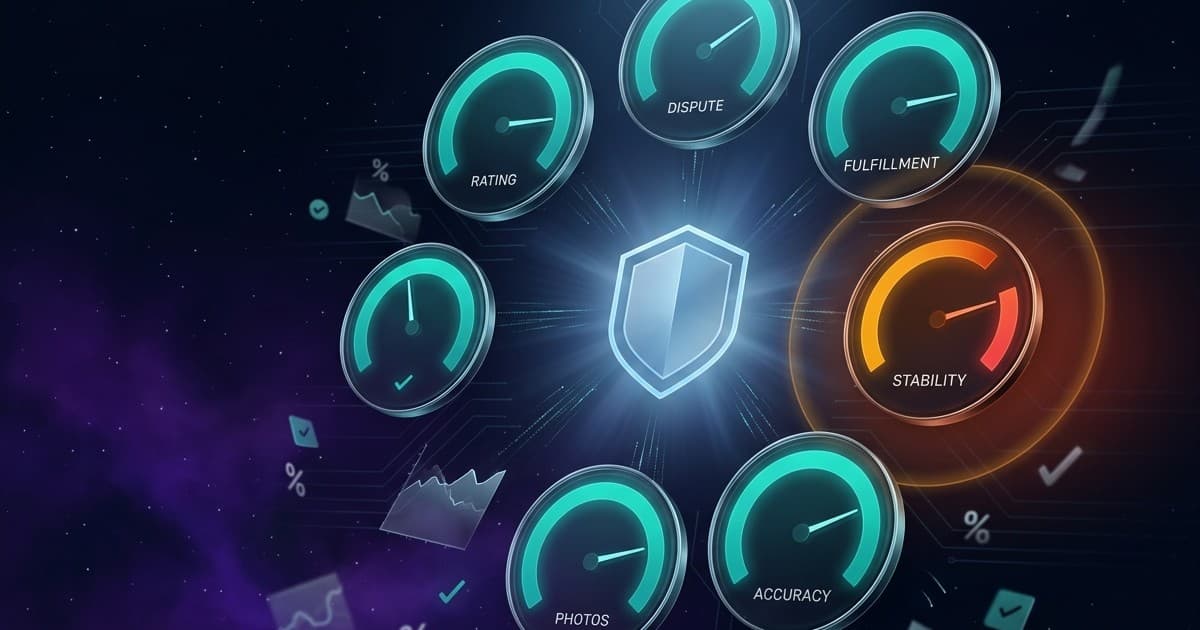
One bad supplier can destroy a store that took six months to build. Not one bad product — one bad supplier. The customer files a dispute, your payment processor flags the account, the refund rate climbs, and ad platforms quietly raise your CPMs because your pixel data starts looking unreliable. All because you skipped the 90-second step of reading the risk assessment before placing your first order.
This is Part 2 of the Product Scoring Masterclass series. Part 1 covered the Winning Score — the 0–100 composite of seven listing signals and its three bands (High Potential 75+, Medium 50–74, Low below 50). Here, we go deeper on the second half of that equation: the Risk Assessment. You will learn what each of the six risk dimensions measures, what safe versus dangerous looks like for each one, and exactly what to do when a flag appears.
The goal is not to avoid all risk. It is to understand the specific risk you are taking so you can decide whether you have a mitigation plan — or whether you should walk away.
Why Risk Assessment Matters More Than the Price
Dropshippers spend enormous energy finding low-cost suppliers. This is rational — margin is everything. But the cheapest supplier who delivers wrong items at a 4% dispute rate will cost you far more than a slightly more expensive supplier with a 0.8% dispute rate.
Here is the math that most new dropshippers skip.
A $12 product at 3% dispute rate means 3 disputes per 100 orders. At an average refund cost of $15 (product + shipping + your time), that is $45 in dispute costs per 100 orders — $450 per 1,000 orders. A supplier who costs $1.50 more per unit but runs a 0.6% dispute rate generates $9 in dispute costs per 100 orders. You break even at roughly 30 units. Above 30 units, the better supplier is cheaper even though the unit cost is higher.
Risk Assessment is how you calculate the true cost of a supplier before you commit to scaling.
The second reason risk matters more than price: payment processors and marketplaces use dispute rate as an algorithmic signal. PayPal, Stripe, and Shopify Payments all monitor dispute percentages. Exceed their thresholds — typically 1–2% — and you face rolling reserves, account holds, or termination. Stripe's threshold is 0.75% for card disputes. One bad supplier scaling to 500 units/month can push you past that threshold in six weeks.
The 6 Risk Dimensions Explained
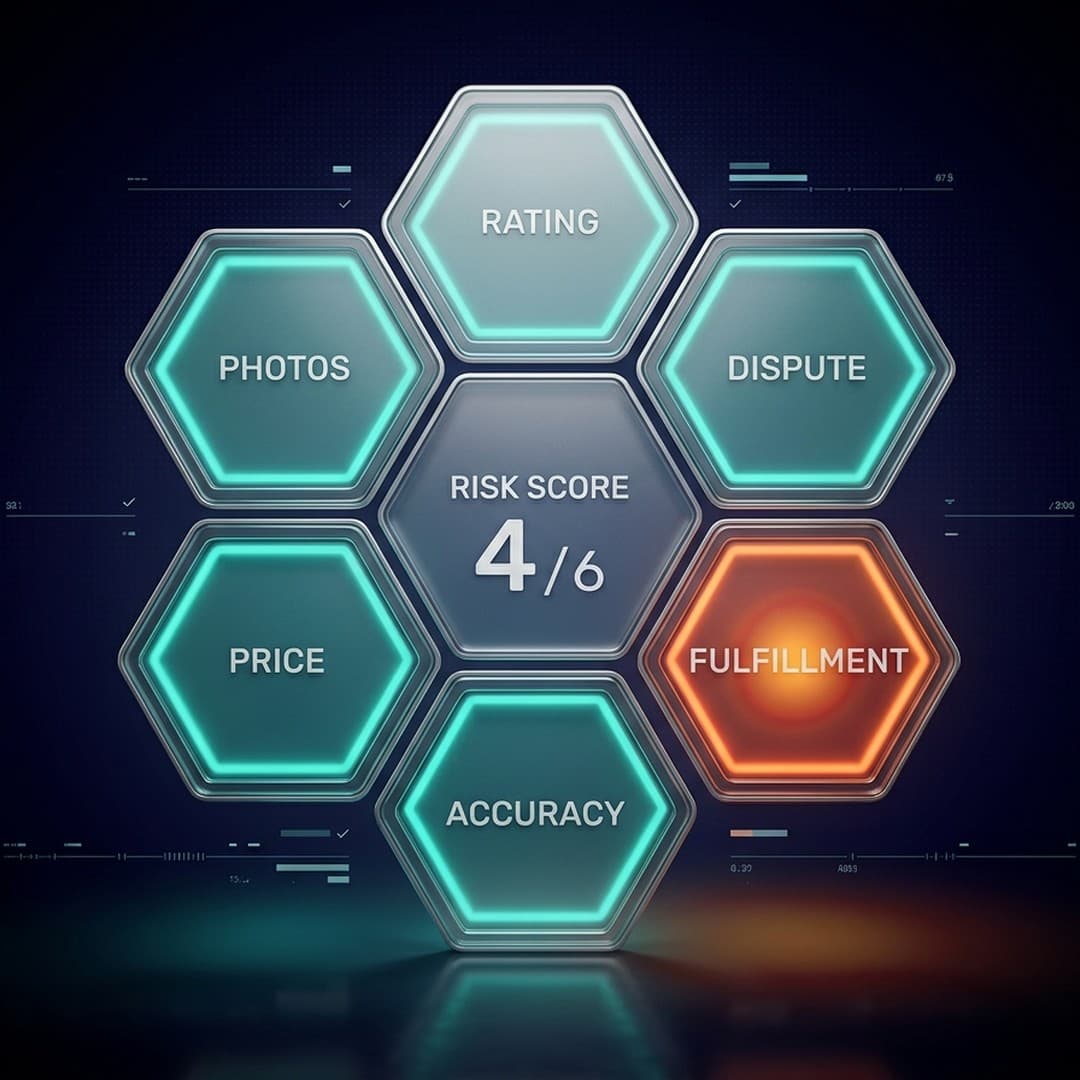
Risk Assessment evaluates a supplier and product across six specific dimensions. Each one is independent. A supplier can be excellent on five and catastrophic on one — and that one is enough to create real operational damage.
Dimension 1: Supplier Rating Risk
What it measures: The percentage of positive feedback across all orders from this supplier's store, typically tracked over the last 6 months.
Safe threshold: ≥ 97% positive feedback. Elevated risk: 95–96.9%. High risk: Below 95%.
The platform average for active AliExpress stores is around 96.8%. A supplier at 99%+ is genuinely exceptional. A supplier at 94% sounds close to good — but that 6% negative feedback rate means 1 in 17 customers left a negative or neutral review, which systematically understates real problems because most dissatisfied buyers do not leave reviews at all.
What to do with a yellow flag (95–97%): Look at the actual review content. Is the negative feedback about shipping time (a logistics issue that may not reflect product quality) or about wrong items and quality failures (a supplier reliability issue that will follow you)? Shipping complaints are manageable. Wrong item and quality complaints are not.
Dimension 2: Dispute Rate
What it measures: The percentage of completed orders that resulted in a formal AliExpress dispute.
Safe threshold: ≤ 1% dispute rate. Elevated risk: 1–3%. High risk: Above 3%.
This is the single most operationally dangerous dimension. Dispute rate is a lagging indicator — it reflects real customer outcomes, not just reported feedback. Customers who file disputes are those who felt strongly enough to escalate, meaning the real dissatisfaction rate is typically 3–5x the formal dispute rate.
A 4% dispute rate means 4 customers in every 100 escalated formally. The real dissatisfaction rate is probably 12–20%. You are building a store on a supplier that will make 1 in 5 customers unhappy. No creative, no brand, no ad spend overcomes that.
What to investigate when dispute rate is elevated: AliExpress dispute records (when visible) often include the dispute category. "Item not as described" and "item not received" are different failure modes. Not received disputes can indicate logistics partners, not the supplier itself. Not as described is a supplier quality failure and is non-negotiable.
Dimension 3: Fulfillment Speed
What it measures: The average number of days between order placement and confirmed shipment from the supplier's warehouse, and average total delivery time to common destination countries.
Safe threshold: Ships within 3 days, total delivery under 20 days to major markets. Elevated risk: Ships within 5–7 days, delivery 20–25 days. High risk: Average shipping above 25 days, or ship time above 7 days.
Customer satisfaction research is consistent across e-commerce: delivery expectations have compressed significantly. A 2023 UPS study found that 58% of online shoppers consider 5–8 business days the maximum acceptable delivery window before they feel disappointed. At 25+ days, you are generating negative reviews not because your product is bad but because your supply chain is slow.
For dropshippers, long fulfillment times mean your customer service inbox fills up with "where is my order" tickets. Each ticket costs roughly 8–12 minutes of handling time. At 200 orders/month with a 25-day fulfillment cycle, you are spending 25–40 hours per month answering "where is my order" — before you deal with any real issues.
What to do: Fulfillment speed risk is often addressable. Check whether the supplier has a US warehouse option (with extra vetting — see the tariff section below), or look for alternative suppliers in the same niche with faster logistics partners.
Dimension 4: Product Photo Authenticity
What it measures: Whether the product photos on the listing are authentic images taken by the actual supplier, or whether they are stolen from other brands, taken from stock photo libraries, or copied from manufacturer catalogs without authorization.
Safe signal: Photos show the actual product in real environment, multiple angles, some user-context shots, and visible quality details. Risk signal: Photos are clearly studio-perfect stock imagery, watermarks from other sellers are visible, or reverse image search shows the same photos on dozens of unrelated stores. High risk signal: Photos match a known branded product (suggesting a counterfeit or unauthorized reseller).
Photo authenticity is a proxy for whether you are dealing with the actual manufacturer or a reseller who has never touched the product. Resellers are not inherently bad — many legitimate dropshipping suppliers are resellers — but a reseller who uses stolen photos has no quality control relationship with the manufacturer and cannot guarantee what you receive matches what is shown.
The counterfeit risk: If photos match a branded product and the price is significantly below market rate, you are likely looking at a counterfeit. Selling counterfeit goods exposes you to intellectual property liability, payment processor termination, and Shopify store takedowns. This is one dimension where a red flag is an absolute stop — not a "proceed with caution."
Dimension 5: Description Accuracy
What it measures: How closely the product listing description matches what buyers actually receive, as inferred from review content and dispute records.
Safe signal: Buyer reviews consistently confirm specs (size, material, color, function) match the listing. No pattern of "not as described" complaints. Risk signal: Reviews mention dimension discrepancies, material substitutions, missing accessories, or functionality gaps. Multiple "not as described" dispute categories visible. High risk signal: The listing uses exaggerated performance claims with no basis ("military-grade," "100% waterproof," "medical-certified") and reviews contradict these claims directly.
Description accuracy risk has a second dimension that matters specifically for dropshippers: return policy exposure. If you are selling a product with inaccurate descriptions, your return rate will be elevated, and your Shopify disputes will reflect "item not as described" — the same flag that triggers payment processor review.
Dimension 6: Price Stability
What it measures: How much the product's listed price has changed over the past 90 days, and whether those changes follow a logical seasonal pattern or suggest supply chain instability.
Safe threshold: Price change ≤ 10% over 90 days, or seasonal changes with a clear pattern. Elevated risk: 10–15% price change over 90 days with no seasonal explanation. High risk: Price change > 15% over 90 days, frequent price spikes, or price volatility without pattern.
Price instability is a leading indicator of supply problems. Suppliers raise prices when their input costs increase, when their manufacturer changes pricing, or when they are struggling to source inventory and substituting with a more expensive alternative. The product you tested at $8.50 last month that is now $11.20 is not the same product — the supplier may be sourcing from a different manufacturer to cover stock shortfalls.
For dropshippers, unexpected price increases after you have set your retail price compress your margin without warning. If you are running ads at a target ROAS of 3x based on a $8.50 cost, a $11.20 cost shifts your break-even and your ads become unprofitable mid-campaign.
How to Read a Risk Assessment Report: Step by Step
If you are using AliShopping Tools, the Risk Assessment tab surfaces all six dimensions automatically on any AliExpress product page. Here is how to work through it systematically.
Step 1: Check the overall risk tier first.
The overall tier is a summary, not a replacement for reading the details. Use it to calibrate how much scrutiny to apply in the next steps:
| Risk Tier | What it means | Your action |
|---|---|---|
| Low Risk | All 6 dimensions green | Proceed — still order a sample above $20 AoV |
| Medium Risk | 1–2 yellow flags | Order a sample before any paid ads |
| High Risk | Any single red flag | Identify the specific flag and decide if you have a mitigation plan |
| Critical Risk | Multiple red flags | Do not source from this supplier |
Step 2: Identify which dimensions are flagged.
Do not stop at "Medium Risk." Read which dimensions are yellow or red. A yellow flag on fulfillment speed is very different from a yellow flag on dispute rate. Same tier, different implications.
Step 3: Investigate the specific flag.
For each flagged dimension, go one level deeper:
- Supplier rating: Read negative reviews for themes.
- Dispute rate: Look at dispute categories if visible.
- Fulfillment speed: Check whether a warehouse option exists in your target market.
- Photo authenticity: Run a reverse image search (Google Images or TinEye) on the main product photo.
- Description accuracy: Filter reviews to show 1–3 star reviews and read for "not as described" language.
- Price stability: Note the current price versus 30-day and 90-day historical prices.
Step 4: Apply the sample order decision rule (next section).
Step 5: Record your assessment.
Keep a supplier tracker. Date, product, overall risk tier, specific flags, and your mitigation plan. When you scale a product, this log is your audit trail.
The Sample Order Decision Rule
The sample order is the most reliable risk mitigation available to dropshippers. It converts supplier claims into verified reality before you commit ad spend.
When to always order a sample before scaling:
- Any product above $20 average order value
- Any product where you plan to spend more than $500 on ads before testing
- Any product with a Medium or higher risk rating
- Any product with photo authenticity concerns
- Any product where description accuracy reviews are mixed
What to evaluate when your sample arrives:
- Packaging: Does it match what buyers will receive? Is it generic enough to be unbranded for your store, or does it contain the supplier's branding?
- Dimensions and weight: Measure against the listing. Off-spec products generate the highest return rates.
- Material and build quality: Does it match the listing's material claims? Cheap substitutions are common.
- Function: Does every claimed feature work? Test all of them.
- Photography potential: Is the product photogenic enough to create your own creative? Products where you cannot produce original photos are harder to differentiate.
- Shipping experience: How many days did it take? Was tracking reliable? How was the packaging condition on arrival?
The cost of a sample order is the cheapest insurance you can buy. A $15 sample that reveals a quality problem saves you from $1,500 in ad spend on a product that will generate 15% returns.
Common Risk Flags and Exactly What to Do
"New Supplier" (Store Age < 6 Months)
What it means: The store opened recently. You have limited order history to evaluate.
What to do: Not a reason to automatically reject. Check order velocity — some new stores are launched by experienced suppliers moving to a new storefront. Order a sample regardless of AoV. Send a message and evaluate response time and quality. Look for whether the store has products that have been selling for 60+ days with at least 50 orders and no significant dispute complaints.
"Seasonal Price Spike"
What it means: The price has increased significantly, but the timing aligns with a known seasonal demand cycle (e.g., outdoor products in spring, holiday decorations in October).
What to do: Not necessarily a red flag. Verify the seasonality logic — is the product genuinely seasonal? If yes, accept the spike as expected and note the likely pricing floor post-season. If the product is not seasonal and the spike has no explanation, treat it as supply chain instability.
"High Dispute Rate — Wrong Item Category"
What it means: The supplier is fulfilling orders with incorrect products — wrong color, wrong size, wrong variant.
What to do: This is a supplier operations failure, not a product quality failure. Investigate whether the error rate is concentrated on specific SKUs (variant-level confusion is common with complex products) or across all products. A supplier with wrong-item disputes concentrated on size variants may be manageable with explicit SKU-level ordering instructions. A supplier with wrong-item disputes across all products has a warehouse or QC problem that you cannot fix from outside.
"High Dispute Rate — Quality Issues Category"
What it means: Buyers are receiving products that do not meet quality expectations.
What to do: Read the specific dispute descriptions. If quality complaints are about fragility, material cheapness, or function failure, these are manufacturer-level issues that no supplier relationship will resolve. Walk away. If quality complaints are about minor cosmetic defects, evaluate whether your customer base is quality-sensitive enough for this to matter.
"No Authentic Photos — Stock Imagery Detected"
What it means: The supplier is using photos from another source — either a manufacturer's product catalog they do not own, stock photography, or images stolen from a legitimate brand.
What to do: Run the reverse image search. If the photos belong to a legitimate brand and the supplier's price is significantly below retail, you are looking at a counterfeit or unauthorized reseller. Do not source. If the photos are generic stock imagery (not brand-specific), the supplier may simply have poor marketing. Order a sample to evaluate the actual product, and if the product is legitimate, take your own photos.
"Price Change > 15% in 90 Days — No Seasonal Explanation"
What it means: The supplier is experiencing input cost pressure, supply shortages, or is testing price sensitivity.
What to do: Contact the supplier directly to ask about the price change. Legitimate suppliers will explain. If they cite material cost increases or logistics changes, evaluate whether the new price still allows viable margin. If no explanation is offered, treat as a supply instability signal and look for alternative suppliers in the same niche.
The Tariff Angle: US Warehouse Suppliers Need Extra Vetting in 2025–2026
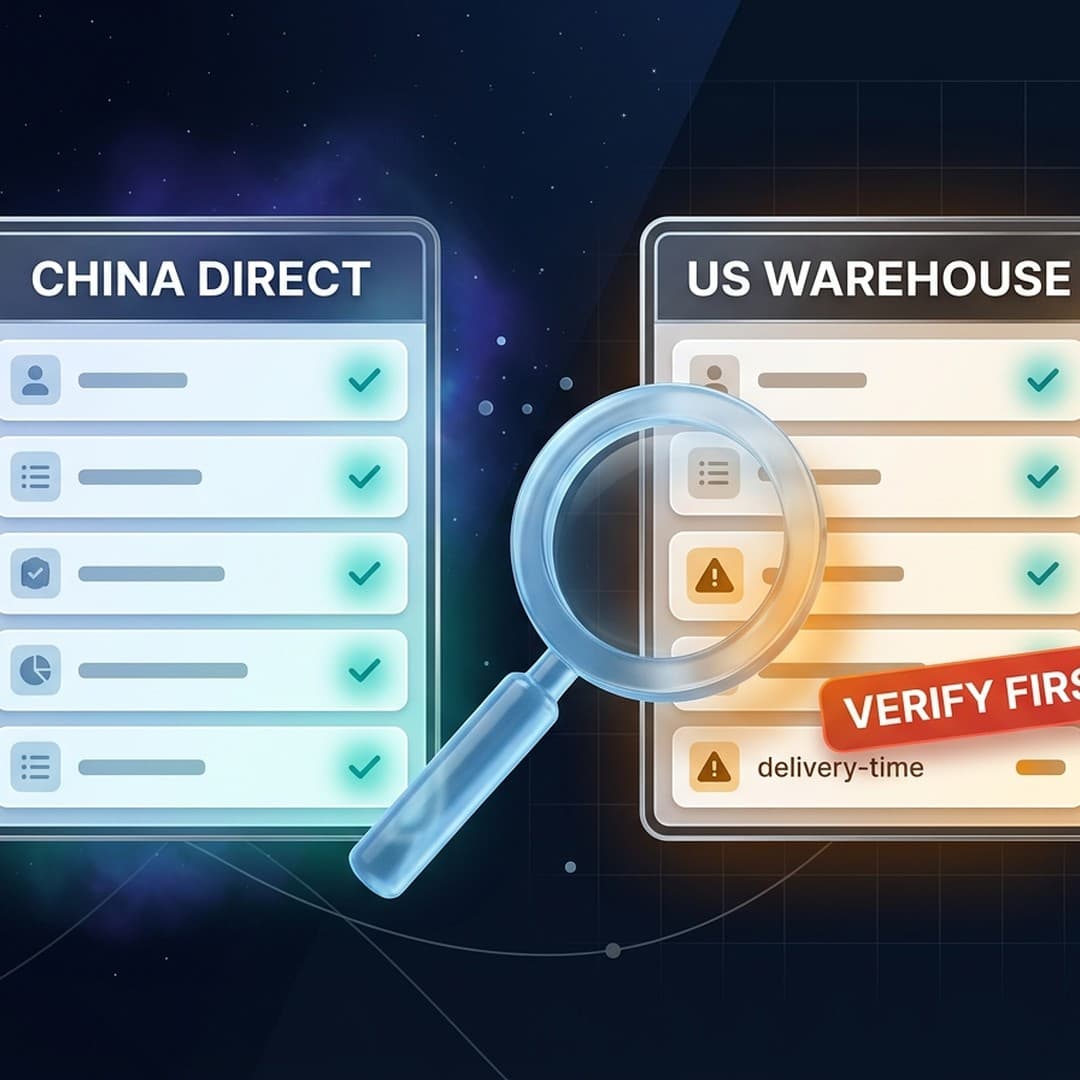
The 2025 tariff adjustments on goods from China created a significant secondary market problem for dropshippers targeting US buyers: suppliers rushed to advertise US warehouse inventory that did not actually exist at scale.
The "US warehouse" label on AliExpress does not guarantee genuine domestic inventory. Some suppliers mark products as US warehouse when the inventory is minimal (10–20 units) and quickly falls back to standard China shipping once the US stock depletes. Others are routing through Canadian warehouses and still applying the US warehouse label misleadingly.
Extra vetting steps for US warehouse suppliers:
- Check fulfillment speed data: Genuine US warehouse fulfillment should show 3–5 day delivery. If the supplier's average delivery time to the US is still 14+ days, the "US warehouse" label is not reflecting reality.
- Message the supplier to confirm inventory count and typical availability window. Genuine US warehouse operations can answer this specifically.
- Price check: US warehouse pricing should reflect domestic inventory costs, which are 20–35% higher than China-direct for most product categories due to storage and pre-import costs. A supplier claiming US warehouse at the same price as China-direct is almost certainly misrepresenting inventory location.
- Order a sample specifically to a US address. The fulfillment experience of your sample is the most reliable indicator of what your customers will receive.
Building a Supplier Shortlist: Combining Risk Score with Winning Score
The Risk Assessment and Winning Score are complementary — they answer different questions.
| Metric | Question answered | What high means |
|---|---|---|
| Winning Score | How strong are this listing's public signals? | Real order volume, a good rating, a large review base, a well-built listing |
| Risk Assessment | Can this supplier deliver? | Low dispute rate, authentic, stable, fast |
The combination rule:
A listing with a High Potential Winning Score of 78 and a Critical Risk supplier is not a good opportunity — it is a promising listing in the wrong hands. Your job is to find suppliers with both a compelling product signal and a clean risk profile.
How to build a shortlist:
- Use AliShopping Tools to score products as you browse. Triage by band first — High Potential candidates go to the top of the queue, Low Potential ones get skipped unless you have a specific reason to look closer.
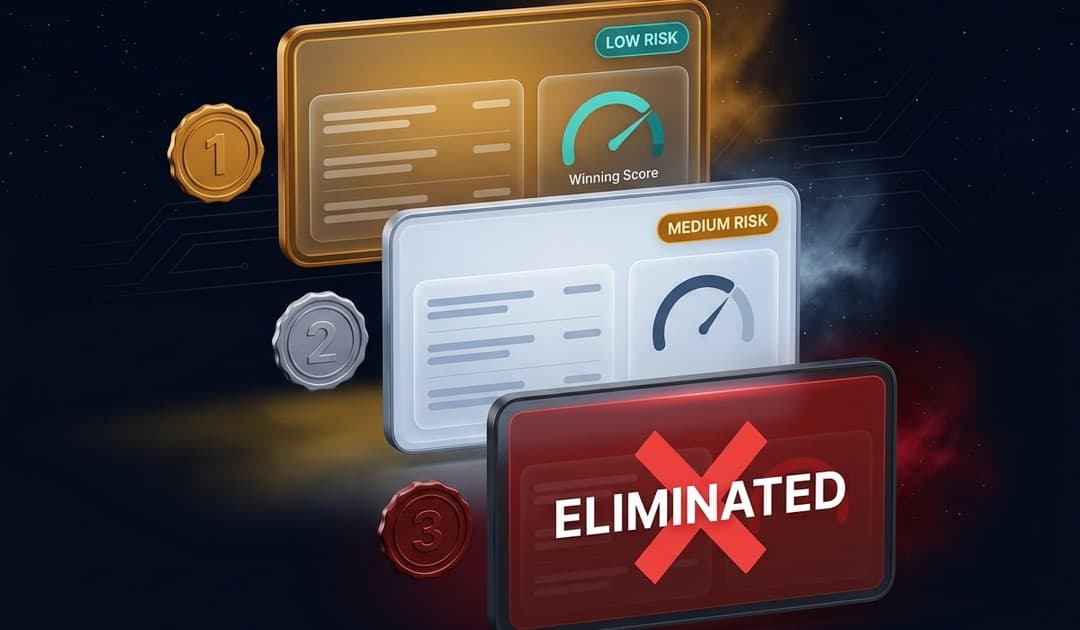
- For each candidate, run the Risk Assessment and eliminate any with Critical Risk immediately.
- For High Risk suppliers, determine whether the specific flag is addressable. Document your mitigation plan.
- For Medium Risk suppliers, schedule a sample order and a 30-day monitoring window before scaling.
- For Low Risk suppliers, proceed — and still order a sample above $20 AoV.
The shortlist should always have 3–5 qualified suppliers per product niche. Single-supplier dependency is itself a risk that no Risk Assessment score can protect against — if your one supplier goes offline, your store goes offline with them.
The 90-day supplier review:
Set a calendar reminder to re-run the Risk Assessment on your active suppliers every 90 days. Supplier performance changes. A store that was rated 98% positive six months ago can deteriorate to 93% after a management change, supply chain disruption, or factory switch. Monitoring is not a one-time step.
Frequently Asked Questions
What is a "good" dispute rate on AliExpress?
Below 1% is considered safe. Between 1–3% is elevated and requires investigation into the dispute categories. Above 3% is a high-risk signal that should prevent scaling until the root cause is understood. Most top-tier AliExpress suppliers maintain dispute rates below 0.5%.
Can a supplier have a high rating but still be risky?
Yes. Supplier rating reflects all feedback across all products, while dispute rate and description accuracy are product-specific. A supplier with a 98% rating can still have a specific product with a 4% dispute rate if that product has a common quality or description problem. Always check both the store-level rating and the product-level dispute data.
How often should I re-evaluate my suppliers?
Every 90 days at minimum. Additionally, re-run a check after any major event: a new tariff change, a market disruption (COVID, port strikes, extreme weather affecting logistics), or any spike in your own customer dispute rate that might indicate a supplier quality change.
Is a new supplier always too risky to use?
Not automatically. New stores (under 6 months) lack history, but some are launched by experienced operators who have a track record on other platforms. The key mitigation is to always order a sample, start with a small initial order (under 50 units), and scale only after confirming fulfillment quality firsthand.
What should I do if my current supplier's risk score suddenly worsens?
Start sourcing an alternative immediately — do not wait until the supplier fails. Begin by identifying 2–3 replacement candidates with comparable Winning Score products and Low or Medium Risk profiles. Order samples from your top alternative. Once confirmed, reduce your primary supplier's volume gradually while you qualify the replacement. Never go to zero with your primary before your backup is validated.
Product Scoring Masterclass Series
- Part 1: What Is a Winning Score for Dropshipping Products?
- Part 2: How to Read the Risk Assessment ← You are here
- Part 3: The Complete Dropshipping Product Checklist Before You Order
Sẵn sàng tìm sản phẩm thắng?
Thử AliShopping Tools — 15 công cụ AI miễn phí cho nghiên cứu sản phẩm.
Giải đáp nhanh
Câu hỏi thường gặp
1What does an AliExpress supplier risk assessment measure?
A supplier risk assessment scores 6 dimensions: positive feedback rate, dispute rate, fulfillment speed, photo authenticity, description accuracy, and price stability.
Any single red flag is a serious warning.
Multiple red flags together indicate high-risk sourcing that should be avoided or requires a physical sample test before committing.
2What is the sample order rule for AliExpress dropshipping?
For products with an average order value above $20, order a sample before committing to the product.
Inspect the sample for quality, packaging, shipping time, and seller communication.
The sample cost is insurance against refund losses and customer complaints at scale.
Skipping the sample to save a small upfront cost is a false economy.
3What makes a supplier's photo review ratio suspicious?
Real buyers post photo reviews 20 to 40 percent of the time on quality product purchases.
A supplier with hundreds of 5-star reviews but near-zero photo reviews indicates that most reviews may be text-only incentivized feedback rather than genuine buyer experience documentation.
Authentic reviews include a mix of photo and text across rating levels.
4How do I use AliShopping Tools to read risk assessments?
The Risk tab in AliShopping Tools surfaces all six risk dimensions automatically on any AliExpress product page.
Red flags are highlighted.
The overall risk score gives an at-a-glance summary.
Combined with the manual review of the most recent customer comments, the automated risk check completes supplier vetting in under 60 seconds.
5How can I calculate the weighted risk score for an AliExpress product using the six dimensions?
AliShopping Tools' Risk tab already combines the six dimensions into a single at-a-glance score and highlights whichever ones are flagged — you don't need to manually weight and sum them yourself.
There's no bulk upload feature for scoring a whole product list at once; the Risk tab works per product page.
6What red‑flag thresholds should trigger a complete stop of sourcing from a supplier in 2026?
There's no single official industry-wide threshold set for every dimension — treat any dimension that's clearly worse than the rest of a listing's profile as a red flag, and be especially cautious when two or more dimensions look weak at the same time.
The Risk tab's overall score and flags are the fastest way to see this at a glance rather than tracking each raw number yourself.
7How does the “price stability” metric differ for US‑based warehouse suppliers versus overseas sellers on AliExpress?
Price stability is worth checking over whatever window of price history is available for that specific listing — a supplier whose price has been jumping around a lot recently is a bit riskier to lock in a retail price against than one with a steady price line.
There's no different official rule for US-warehouse vs. overseas sellers; just look at whatever history is shown for that specific product.
8When is it safe to skip the $20 sample rule for low‑ticket items, and what alternative verification steps work?
For very low-ticket items, a full physical sample order isn't always practical, but you can still do a lighter check: confirm the supplier's overall fulfillment speed and rating look solid, run a reverse-image search on the product photos to rule out stolen stock images, and check the dispute rate and description accuracy on the Risk tab before bulk-ordering.
9Can I automate risk‑assessment monitoring with AliShopping Tools’ API, and what data fields are returned?
AliShopping Tools doesn't currently offer a public API for automating risk-assessment pulls.
For ongoing monitoring, the practical approach today is checking the Risk tab on your key products on a regular manual cadence (weekly or so) rather than a scripted daily pull.
Bài viết khác
The 20-Point Dropshipping Product Checklist Before You Order (2026)
The definitive pre-order checklist for dropshippers: 20 checks across demand, margin, supplier quality, product risk, and competition. 16+ = green light.
What Is a Winning Score for Dropshipping Products? (Complete Guide)
The Winning Score (0–100) rates every AliExpress product from seven weighted signals on its listing. Learn what each factor measures, what the score does not measure, and how to read the three bands.
How to Do Product Research for Dropshipping: 7-Step Framework (Free Tools, 2026)
A repeatable 7-step product research framework for dropshippers in 2026 — from idea sourcing to live testing, using only free tools. No Ecomhunt subscription needed.