Is Dropshipping Still Profitable in 2026? The Honest Answer
Is Dropshipping Still Profitable in 2026? The Honest Answer
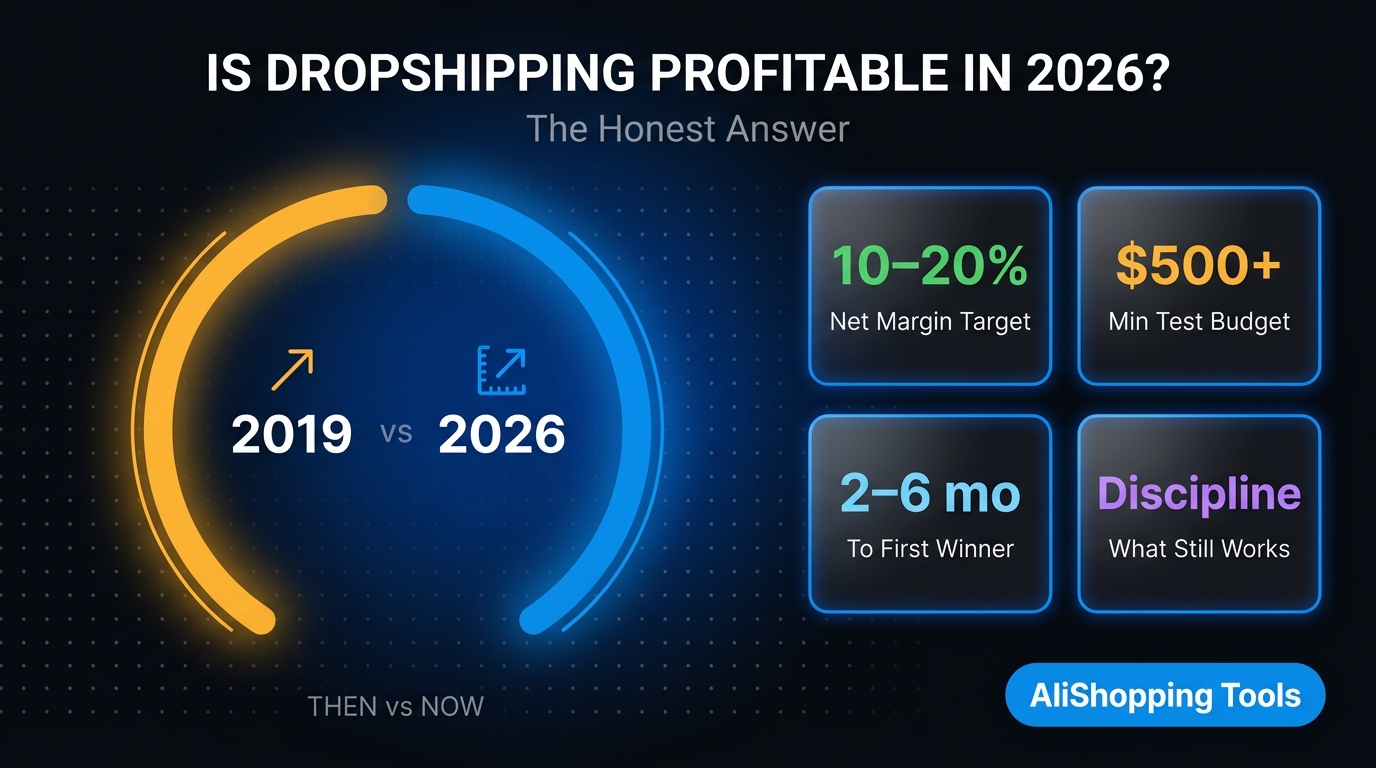
Quick answer: Dropshipping is still profitable in 2026, but net margins sit around 10–20% on well-chosen products — down from the inflated expectations of 2018. The lazy general-store model is dead; disciplined operators who pick specific niches, validate with small ad budgets, and use tools to compress research time still make money. AliShopping Tools is a free Chrome extension that automates competition analysis and price research on AliExpress to help you find the viable margins faster. Install AliShopping Tools on the Chrome Web Store →
Every year since 2019 someone has written "dropshipping is dead." Every year since 2019 new dropshippers have made money anyway. That does not mean the question is silly — it means the answer has to be more specific than yes or no.
In 2026 the honest answer is: dropshipping is still profitable, but the margin for error is thinner, the discipline required is higher, and the "start a general store, run random TikTok ads, scale fast" playbook from 2018 no longer works. This article explains what has changed, what still works, and how to decide if dropshipping is right for you specifically — without fabricated hype numbers or clickbait despair.
June 2026 update: The shipping time problem is still the #1 margin squeeze for US and EU dropshippers. AI-powered product research tools (including ASTools) have become measurably cheaper and faster than 2025 — the barrier to running solid competition analysis is now near-zero for solo operators. The conclusions in this article remain valid; the tool quality caveat in Section 5 has only gotten stronger.
July 2026 update: Added sourced cost-input and category-margin benchmarks (AliExpress shipping tiers, Meta ad CPC/CPA, Shopify payment fees, apparel vs. electronics return-rate data) and a concrete "when dropshipping is NOT profitable" breakdown below — see the "Real-world cost and margin benchmarks" section for citations. The 2025 elimination of the US de minimis duty exemption for China-origin shipments is also now factored in, since it changes landed-cost math for anyone shipping AliExpress orders to the US.
What actually changed between 2019 and 2026
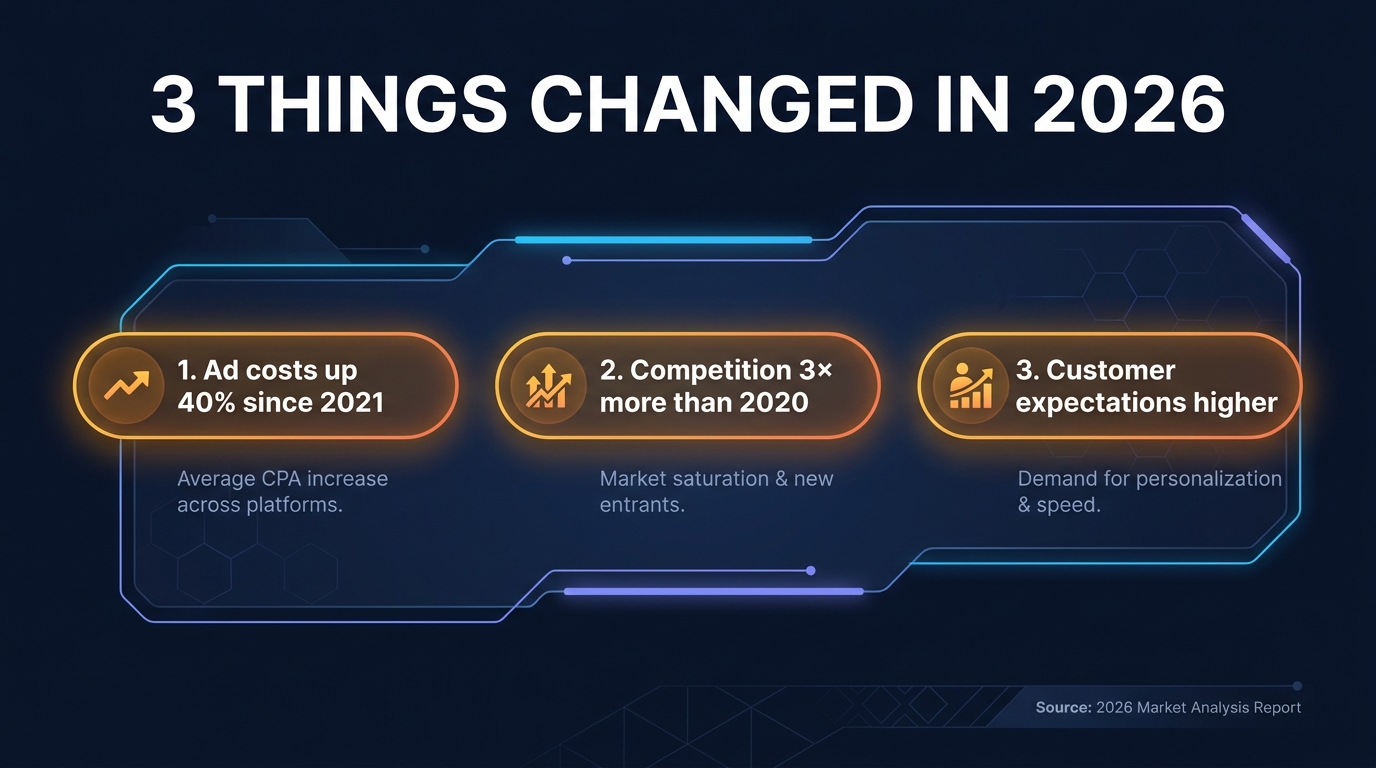
To answer whether dropshipping is profitable, we have to be specific about what has shifted. Five factors matter most:
1. Ad costs have risen
Meta and TikTok ad CPM and CPC costs have trended upward since 2019. We do not invent specific percentage increases — the numbers vary by geography, category, and platform. The directional reality is that a 5 USD CPM in 2019 for a broad ecommerce audience is typically higher today. That compresses margin on any ad-dependent model, dropshipping included. Operators now need a sharper creative and a better offer just to break even on ads.
2. Customer expectations shifted
Amazon Prime trained a decade of shoppers to expect 2-day shipping. AliExpress standard shipping (15 to 45 days typical) is now the single biggest conversion killer in dropshipping — a visible "delivery in 4 weeks" estimate on checkout drops conversion meaningfully. Operators who work around this (express shipping via DSers partner logistics, warehoused fulfilment via CJDropshipping, domestic fulfilment partnerships) pay more per unit but convert visitors at a higher rate. The net is often positive, but it is a trade-off dropshippers did not have to make in 2019.
3. Market saturation in "easy" niches
Phone accessories, fidget toys, pet gadgets, and fitness-band categories are now saturated. Hundreds of stores sell the same viral products within days. The result: a winning product in 2026 peaks and dies faster than in 2019, and the window to ride a trend is measured in weeks rather than months. This means research and speed matter more than ever — stores that take 3 weeks to launch a product miss the window.
4. Platform policy tightening
Meta, TikTok, and Shopify have all tightened policies on misleading claims, stolen product images, and drop-and-disappear stores. Stores doing shady practices now get banned faster. This is good for legitimate operators — less noise to compete against — but it means the "cookie-cutter general store" approach is riskier than ever. A single chargeback spike can lock your Shopify payment processing; a single policy violation can lock your Meta ad account.
5. Tool quality has improved
This is the one counter-current. The Chrome extension research category has improved dramatically. Free tools in 2026 deliver analysis that required 50 USD a month subscriptions in 2022. That compresses the time from "idea" to "validated product" and lets a solo operator compete with teams on research depth. See our Best Free Chrome Extensions for Dropshipping 2026 article for specifics.
Direct answer: the margin math in 2026
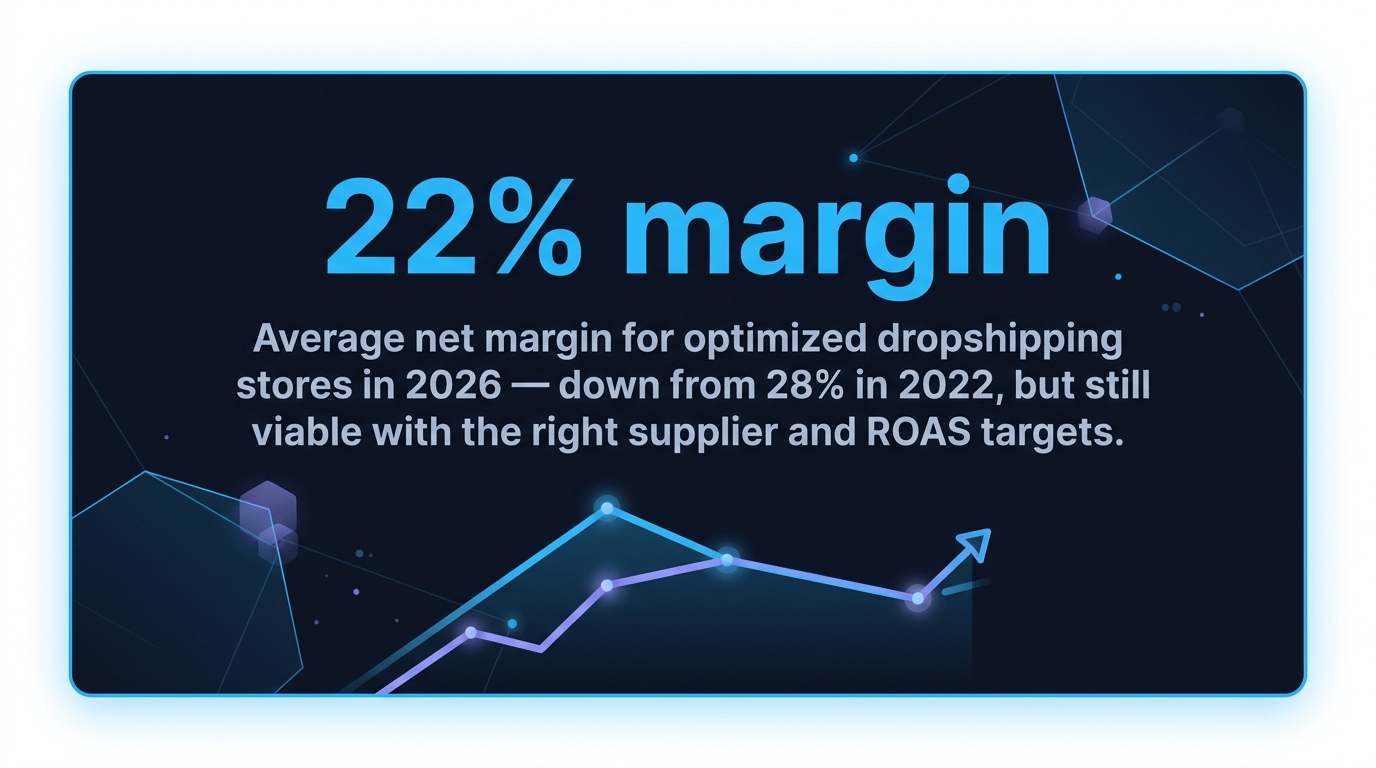
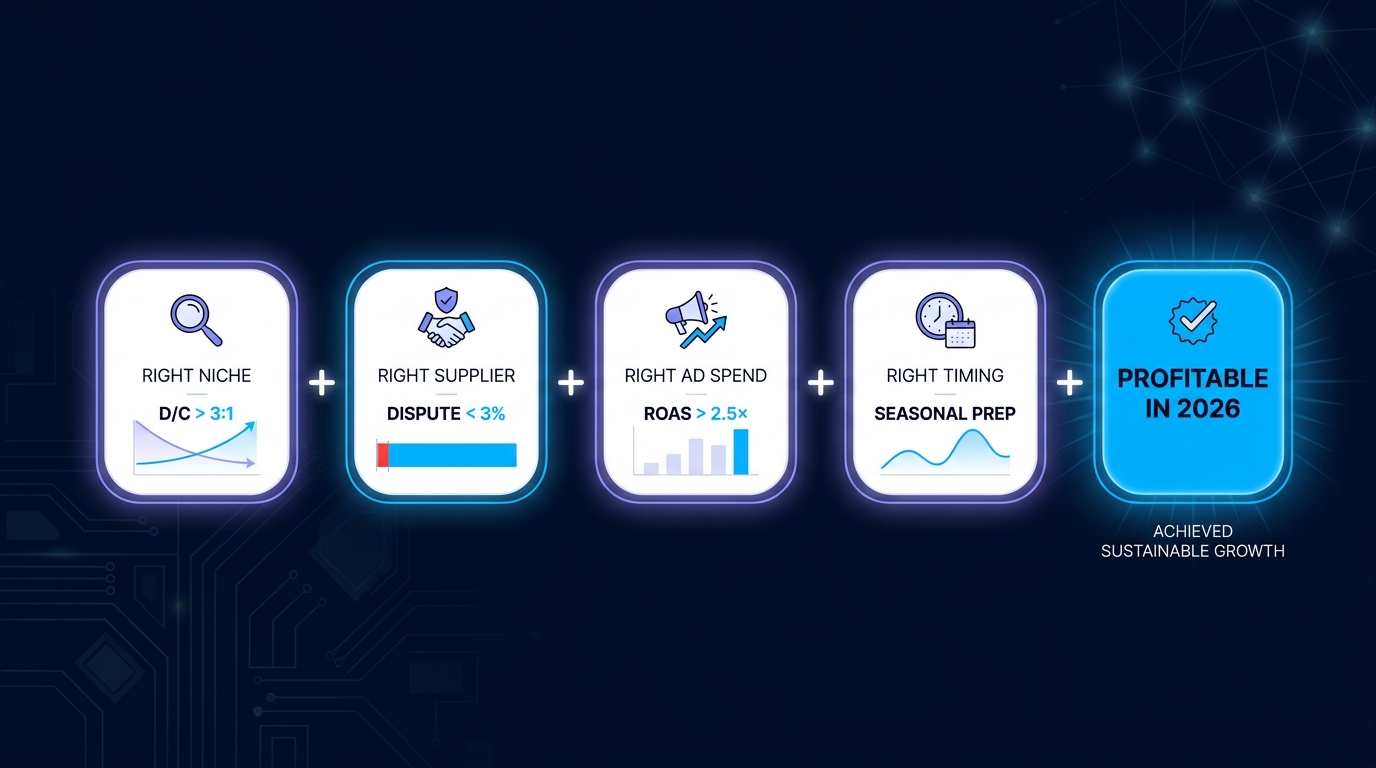
Based on our observations of the dropshipping community in 2026 (community threads, case studies, and our own customer-facing data), typical net margins on well-chosen products sit in the 10 to 20 percent range after ads, platform fees, chargebacks, and refunds. We use "observations" honestly — no specific published industry report is cited here because dropshipping-specific profit margin benchmarks are not systematically surveyed, and any precise percentage claim would be fabricated.
Run your own numbers with the free AliExpress Profit Calculator at astools.app — enter your product cost, shipping method, and target price to get instant margin and break-even estimates.
Here is the realistic breakdown for a 30 USD retail product sourced from AliExpress at 8 USD:
| Line item | Typical 2026 value | Notes |
|---|---|---|
| Retail price | 30 USD | Common sweet spot for dropshipping |
| AliExpress cost + shipping | 9 USD | 8 USD product + 1 USD AliExpress standard shipping |
| Shopify transaction fees | 1 USD | Approx 2.9% + 0.30 USD per transaction |
| Ad cost per order | 10 to 12 USD | Depends on creative, niche, funnel quality |
| Refunds and chargebacks | 1 to 2 USD | 3 to 6% of revenue, blended |
| App subscriptions (per-order allocation) | 0.50 USD | DSers, email, upsell apps |
| Estimated profit | 4 to 8 USD per order | 13 to 27% net margin range |
At 10 orders a day — a realistic lean-operator volume — that is 40 to 80 USD a day net, or 1,200 to 2,400 USD a month. Scale by 3-5x with operational discipline and ad efficiency and you reach a sustainable solo income. Scale past that and it becomes a team operation with team overhead.
The frank reality: "passive" dropshipping at 100 USD a day of net profit is achievable with disciplined execution. "Passive" dropshipping at 10,000 USD a day is a headline, not a common outcome.
Real-world cost and margin benchmarks (sourced)
The worked example above is directional. Here is what published 2025-2026 industry data says about the actual cost inputs that determine whether a specific product is profitable:
| Cost input | Typical 2025-2026 range | Source |
|---|---|---|
| AliExpress supplier cost | Varies by category — commonly 5 to 30 USD for impulse/mid-tier dropshipping items. Example: an automated cat feeder costs roughly 24.30 USD from the supplier and commonly retails for 89 to 119 USD on dropshipping stores | Aggregated 2025-2026 AliExpress dropshipping guides |
| AliExpress standard shipping (Cainiao Standard) | 1.40 to 3.20 USD, 10 to 18 days to the US | Aggregated 2025-2026 AliExpress dropshipping guides |
| AliExpress Premium Shipping | 3.50 to 8.00 USD, 7 to 12 days — generally only worth the extra cost above roughly 40 USD retail price | Aggregated 2025-2026 AliExpress dropshipping guides |
| ePacket | Still offered by an estimated 60% of suppliers, 14 to 22 days | Aggregated 2025-2026 AliExpress dropshipping guides |
| Meta (Facebook/Instagram) ads — cost per click | 0.50 to 2.00 USD typical range; 0.70 USD median across all industries in 2025 (down about 6.7% year over year) | WordStream Facebook Ads Benchmarks 2025 |
| Meta ads — cost per purchase (CPA) | Roughly 38 to 53 USD median for ecommerce in late 2025, with a 13-month average near 48 USD | WordStream / Triple Whale 2025 Meta ad benchmark data |
| Shopify Payments processing fee | 2.9% + 0.30 USD (Basic plan) down to 2.15% + 0.30 USD (Plus plan), depending on plan tier | Shopify official credit card processing fee schedule |
| US import duties on AliExpress orders | New cost line since 2025 — the roughly 800 USD "de minimis" duty-free exemption for China-origin low-value shipments was eliminated in 2025, so orders that previously entered the US duty-free can now carry duties that did not apply before | 2025 US customs policy change, widely reported |
What this means for a specific product: if a category's Meta CPA (38 to 53 USD) already exceeds your per-order gross profit before ads, that product's unit economics are broken regardless of how well the ad creative performs. This is the single most common mechanical reason a "reasonable-looking" product never turns a profit — the research step needs to check this ratio before spending real ad budget, not after.
Margin ranges by category (sourced, not a single "dropshipping margin" number)
"Dropshipping margins vary" is true but not useful. Published category-level data shows the range is wide enough that category choice alone can be the difference between profit and loss:
| Category | Typical gross margin | What compresses it | Net reality |
|---|---|---|---|
| Apparel | 50 to 65% gross — the most attractive sticker margin of any category | Return rates of 20 to 40% (roughly 25% as a common benchmark), at an estimated 20 to 35 USD processing cost per return | Net margin can collapse to as low as roughly 4% despite the high gross number — apparel is a return-rate business more than a margin business |
| Generic/commodity electronics | 15 to 25% gross — already thin | A 38 to 53 USD Meta CPA can exceed the entire per-order gross profit before any other cost is counted | Frequently net-negative on paid acquisition; return rates are comparatively low (8 to 15%, roughly 11% as a benchmark) but the margin cushion is too thin to absorb 2026 ad costs |
| Private-label / branded jewelry and accessories | 45 to 80% gross — the widest range found in published data | Higher operational complexity (custom branding and packaging via a sourcing agent) offsets some of the margin advantage | Best margin cushion of the three categories, contingent on execution quality holding up |
| Blended dropshipping average (all categories) | — | Ads (commonly mid-30s to 50% of revenue on cold paid traffic), COGS plus shipping, payment fees (2.15 to 2.9% + 0.30 USD), and refund provision | 10 to 30% net margin range overall; most working operators land in the 15 to 20% band; sub-10% net is common among beginners and poorly-vetted categories |
Sources: aggregated 2026 dropshipping statistics reports (Carro, Branvas, SellersCommerce), ecommerce profit-margin benchmark analyses (Ask-Luca "Ecommerce Profit Margins for DTC Operators," Eightx "Average Ecommerce Profit Margins by Industry"), and category-specific margin calculators (Uniqbe electronics dropshipping margin analysis). These are industry-aggregated estimates, not a single audited survey — treat the ranges as directional, not exact.
Where dropshipping still works in 2026
Not all dropshipping is equal. Some subcategories are harder than others. Based on community patterns we observe:
Niches that still work
- Specific hobby / enthusiast verticals — fishing gear, gardening tools, pet supplies for specific breeds, RV/van-life accessories. Narrow audiences with real purchase intent, less saturated than "general gadgets."
- Problem-solving products with clear demos — tools that solve a specific daily frustration demonstrable in a 15-second ad. High conversion when targeted correctly.
- Seasonal and gift products with clear gifting windows — Christmas, Mother's Day, Valentine's. Short windows but high intent traffic.
- Low-competition sub-categories identified by research tools — this is where modern research tools earn their keep. Our low-competition products guide walks through the pattern.
Niches that are brutal in 2026
- General "viral gadgets" stores — saturated, short-window, high ad costs.
- Fast fashion with high return rates — return rates crush margin.
- Categories where Amazon Prime sets the customer expectation — electronics, basic household goods. 2-day shipping expectation kills dropshipping from AliExpress.
- Heavily regulated categories — supplements, skincare claims, electronics with certifications. Platform policy violations sink entire stores.
When dropshipping is NOT profitable: concrete failure modes
"Margins vary" is not an actionable warning. Here are the specific, mechanical ways real stores lose money in 2026, each tied to the sourced benchmarks above rather than a vague caution:
- The apparel return-rate trap. A store sees 50 to 65% gross margin on a clothing item and assumes it is a great category. It is not, once returns are counted: at a 20 to 40% return rate (25% is a common benchmark) and an estimated 20 to 35 USD processing cost per return, net margin on apparel routinely lands around 4% — barely above break-even, and a single bad sizing batch can push it negative. The fix, if you sell apparel at all, is to price the return cost into the product from day one, not discover it after 200 orders.
- The electronics CPA trap. Generic electronics carry only 15 to 25% gross margin. Against a 2025-2026 Meta ecommerce CPA of roughly 38 to 53 USD, the ad cost alone can exceed the entire per-order gross profit on anything priced under roughly 150 to 200 USD retail — meaning the product loses money on advertising before shipping, refunds, or platform fees are even counted. This is a math failure, not a marketing failure; no amount of creative iteration fixes a category where the margin ceiling is below the acquisition cost.
- Scaling before the unit economics are proven (the failure mode our own FAQ below calls out separately) — spending 500 USD a day on a product only validated at 50 USD in spend. Ad platforms do not reward sudden scale with proportionally better performance; broken unit economics at small scale get worse, not better, at large scale.
- Ignoring the 2025 import-duty change. The elimination of the roughly 800 USD "de minimis" duty-free exemption for China-origin shipments means US-bound AliExpress orders can now carry duties that a 2022-era margin calculation never accounted for. A store still pricing off a pre-2025 cost model is silently eating a cost line that did not exist when they built their pricing.
- Long shipping windows in duty-sensitive or high-expectation categories. Combining 15-to-45-day AliExpress standard shipping with categories where Amazon has trained 2-day-delivery expectations (electronics, basic household goods) compounds two failure modes at once: higher refund rates from delivery-time frustration, stacked on top of the category's already-thin margin.
None of these are reasons dropshipping as a whole is dead — they are reasons a specific product-category-shipping combination fails, which is exactly why category and cost-input research (Section "Real-world cost and margin benchmarks" above) has to happen before ad spend, not after.
Feature / strategy comparison for 2026 operators
| Strategy | Works in 2026? | Why |
|---|---|---|
| General store (anything-goes) | Rarely | Saturation + ad costs + platform bans |
| One-product store with demo ad | Yes | Focused messaging + research discipline |
| Niche store (5 to 20 products in one category) | Yes | Brand signal + repeat customers + segmented audience |
| Private-label dropshipping (rebranded packaging via agent) | Yes | Higher margin + brand moat, higher complexity |
| Influencer seeding dropshipping | Yes | Lower ad cost + higher trust, slower ramp |
| Paid-ad scale from day 1 (no research) | No | Without research, 95 percent of ad spend is wasted |
FAQ
Is dropshipping dead in 2026?
No. It is harder and more competitive than in 2019, but operators who pick specific niches, validate before scaling, and use research tools to find low-competition products still earn 1,500 to 5,000 USD a month net as solo operators, with some scaling to team operations. The "passive 10K a month on autopilot" framing is dead. The disciplined solo-operator model is alive.
What margin should I expect in 2026?
Based on our observations of the 2026 dropshipping community, typical net margins on well-chosen products sit in the 10 to 20 percent range after ads, platform fees, refunds, and chargebacks. Categories with clear gifting windows or enthusiast verticals can hit 25 to 30 percent. General viral-gadget stores often run at 3 to 8 percent net, which is a bad use of time. Target a 15 percent blended net as a realistic goal.
How much money do I need to start?
A realistic minimum is 500 to 1,000 USD covering: Shopify trial to first month (30 USD), domain (15 USD), DSers Pro if needed (20 USD), ad testing budget (400 to 900 USD). Below 500 USD you will not have enough ad budget to properly validate a product, so most early "failures" at 100 USD ad budgets are not failures — they are tests that did not finish. Our dropshipping profit margin calculator guide walks through the economic realities.
What tools do I actually need?
The minimum 2026 stack:
- 1a research extension like AliShopping Tools to evaluate AliExpress products,
- 2DSers for AliExpress-to-Shopify fulfilment,
- 3Canva for creative. That is a 0 USD tools stack that covers research, fulfilment, and creative. Anything more should be justified by a specific named problem the additional tool solves. See our 2026 free tools stack for the full breakdown.
How long until I see profit?
Realistic expectation: 2 to 6 months of testing before you find your first consistent winner. Most operators who quit after 1 month have not run enough tests to know what works. Most operators who profit in year 2 did not profit meaningfully in month 1. Treat the first 90 days as "learning what questions to ask" not "earning income."
What is the biggest failure mode in 2026?
Scaling without validation. The most common expensive mistake is finding a "maybe winner" at 50 USD in ad spend, then scaling to 500 USD a day before confirming the unit economics at 10 to 20 USD a day first. Platform ad algorithms punish sudden scale without supporting conversion data, and broken economics at small scale are devastating at large scale. Validate, then scale. Never skip the validate step.
Should I sell on TikTok Shop instead?
TikTok Shop has lower ad CPMs in some categories as of 2026 but also has different fulfilment dynamics (TikTok-controlled logistics in some regions). It is a legitimate alternative channel but not a replacement for the core discipline of picking products, validating, and scaling responsibly. Whether it outperforms a Shopify plus Meta ads playbook depends on your specific category and geography.
Is AliExpress shipping time still a problem?
Yes. AliExpress standard shipping in 2026 is typically 15 to 45 days for US/EU destinations. For dropshipping purposes, you have three choices:
- 1accept the shipping time and compensate with clear communication plus lower price point,
- 2pay for express shipping via DSers partners to reach 7 to 15 day delivery at higher cost per unit,
- 3move to warehoused fulfilment via services like CJDropshipping to reach 3 to 7 day delivery at the highest cost per unit. The right choice depends on your margin and category.
Check real 2026 delivery estimates by destination country: Canada shipping times · Australia · UK · Germany · US.
What does it actually cost to acquire a customer via ads in 2026?
Per WordStream's 2025 Facebook Ads benchmark data, Meta ecommerce cost-per-click sits around 0.50 to 2.00 USD (0.70 USD median across all industries), while cost-per-purchase (CPA) runs roughly 38 to 53 USD depending on the month, with a 13-month average near 48 USD. That CPA number is the one to check before committing ad budget: if your product's gross profit per order does not comfortably clear 48 USD, you are funding an unprofitable ad account no matter how good the creative is.
Do I need to worry about import duties on AliExpress orders now?
Yes, if you ship to the US. The roughly 800 USD "de minimis" exemption that previously let low-value China-origin shipments enter the US duty-free was eliminated in 2025. This is a real cost line that did not exist in most dropshippers' 2022-2024 pricing models — rebuild your landed-cost math to include it rather than assuming AliExpress cost plus shipping is the full input cost.
Which product categories have the worst margin math in 2026?
Two, for different reasons. Apparel looks attractive on paper (50 to 65% gross margin) but return rates of 20 to 40% at 20 to 35 USD processing cost per return compress net margin to as low as roughly 4%. Generic/commodity electronics have the opposite problem: only 15 to 25% gross margin to begin with, which a 38-to-53 USD Meta CPA can wipe out entirely before shipping or refunds are counted. Private-label jewelry and accessories show the widest published margin range (45 to 80% gross) and are comparatively more forgiving, if execution quality holds.
Honest recommendation
If you are considering starting dropshipping in 2026 — the honest answer is: it is possible but demanding. Here is a frank decision framework:
Start dropshipping if: You have 500 USD plus of testing budget, can commit 10 to 15 hours a week for at least 3 months, can stomach running 5 to 10 failed product tests before finding a winner, and are willing to learn research, creative, and ad skills honestly rather than copy viral playbooks.
Do not start dropshipping if: You expect "passive income" from day one, have less than 300 USD for testing, cannot commit consistent weekly hours, or need short-term income (first 3 months will likely be net negative as you learn).
Already dropshipping and wondering whether to continue? Look at your 90-day trailing data: net margin, ad efficiency, repeat customer rate. If net margin is above 12 percent and you have found a repeatable validation process, keep going. If net margin is below 5 percent and every product is a fresh battle with no leverage, pivot — either to a different niche, a different business model, or a different use of your time.
The 2018 dropshipping fantasy — any product, any store, any creative, easy scaling — is dead. The 2026 reality — specific niches, disciplined research, honest unit economics, steady growth — is alive and accessible to anyone willing to do the work.
Disclosure: This article is published by the AliShopping Tools team. The worked 30 USD product example and the "typical net margins on well-chosen products" framing are based on our observations of the 2026 dropshipping community, not a single audited survey. The category margin ranges, ad-cost benchmarks (Meta CPC/CPA), Shopify payment fee schedule, AliExpress shipping cost tiers, return-rate figures, and the 2025 US de minimis duty change cited in the "Real-world cost and margin benchmarks" and "When dropshipping is NOT profitable" sections are sourced from named third-party industry reports and are linked or cited inline where a specific source exists. Treat all ranges — sourced and observational alike — as directional guides, not guaranteed outcomes for any individual store.
AliShopping Tools
See live AliExpress data in your browser.
Seller trust score, 90-day price history, and live promo codes — on every AliExpress product page. No account, free.
Ready to find winning products?
Try AliShopping Tools — 15 free AI tools for product research.
Quick answers
Frequently Asked Questions
1Is dropshipping still profitable in 2026?
Yes — dropshipping is still profitable in 2026, but margins are tighter than in 2018-2019.
Well-chosen products run 10-20% net margin once ads, payment processing, and refunds are accounted for.
The operators who profit consistently pick a specific niche (not a general store), validate with $50-200 ad tests before committing, source through AliExpress Direct or DSers-tier suppliers to compress shipping below 20 days, and use free research tools (Chrome extensions like AliShopping Tools) instead of paid $50-200/month spy stacks that eat the margin.
2What net margin should I expect from dropshipping in 2026?
After ad cost (35-50% of revenue on cold paid traffic), COGS plus shipping (25-40% of revenue), payment processing (2.9-3.5%), and refund provision (4-7%), well-chosen winning products land at 10-20% net margin.
Anything under 8% net is a margin-of-error business that one bad ad week can wipe out.
Products with under 25% gross margin on AliExpress should be skipped entirely — they cannot absorb 2026 ad costs.
3What changed between 2018 and 2026 for dropshipping profitability?
Five things shifted:
- 1Meta and TikTok ad costs roughly doubled — average CPM moved from $5-10 to $10-25 on dropshipping verticals.
- 2iOS 14.5 attribution loss permanently hurt small-budget testing — you need 50-100 conversions to trust pixel data.
- 3Customer expectations on shipping tightened — 30-45 day delivery now produces 12-18% refund rates vs 4-6% on 10-20 day delivery.
- 4AliExpress Direct and faster fulfillment options removed the worst shipping excuse.
- 5Free Chrome extensions replaced $50-200/month research tools, removing the biggest fixed cost for solo operators.
4Which dropshipping niches are still profitable in 2026?
The niches with healthy margins in 2026 share three traits: AliExpress Direct shipping available (cuts delivery to 10-20 days), gross margin above 60% (room to absorb ads), and emotional or problem-solving demand (impulse-driven categories).
Categories with active winners in 2026 include pet accessories, kitchen gadgets with a clear use-case demo, fitness/yoga accessories under $30, home organization tools, and seasonal home decor.
Avoid pure-commodity electronics (Amazon owns the SERP), apparel basics (sizing returns destroy margin), and anything with $40+ AliExpress cost (too narrow a margin window for ad testing).
5Is dropshipping dead in 2026?
No.
Dropshipping is not dead — the lazy version is dead.
The model where someone opens a general store, runs random TikTok ads on hundred-product catalogs, and scales to six figures in 90 days no longer works.
The disciplined version — niche store, validated product, controlled ad budget, free research tools, sub-25-day shipping — still produces $2,000-15,000/month profits for committed operators within 6-12 months.
Anyone selling you a $997 course promising the 2018 playbook is selling a dead model.
6How do I handle long shipping times in dropshipping during 2026?
You must prioritize suppliers offering express shipping options or use private agents to reduce delivery windows below 14 days.
Standard AliExpress shipping often takes 15 to 45 days, which remains the biggest conversion killer for modern stores.
Customers in 2026 expect tracking reliability and speed, so relying on free e-packet shipping is rarely viable for scaling.
Using AliShopping Tools to filter suppliers by shipping speed can help identify vendors who can meet these tighter delivery expectations without drastically increasing your costs.
7What is the main reason new dropshipping stores fail in 2026?
The primary cause of failure is scaling products without proper validation, leading to wasted ad spend on items that do not convert.
With rising customer acquisition costs in 2026, beginners cannot afford to guess which products will sell.
Successful operators test with small budgets first, ensuring a product has traction before increasing ad spend.
Relying on 'gut feeling' rather than data-driven research often leads to zero net margins.
Utilizing research tools to compress analysis time helps prevent this common pitfall by highlighting products with proven demand early in the process.
8How much ad budget is required to test dropshipping products in 2026?
You should allocate at least $500 to $1,000 specifically for testing products with small daily budgets before attempting to scale.
Because ad costs have risen significantly since the early days of dropshipping, you need enough capital to run multiple tests to find a winning product.
It is risky to invest your entire budget into a single item; instead, spread it across several potential winners to see which generates clicks and sales.
This disciplined approach prevents you from burning through your cash on a losing product immediately.
9How do I find winning dropshipping products for the 2026 market?
Finding winning products requires analyzing market trends and social engagement data rather than simply browsing AliExpress for cheap items.
In 2026, profitable products solve specific problems or cater to passionate niches rather than generic 'cool gadgets.' You need to look for high engagement on platforms like TikTok and verify that suppliers can handle the volume.
AliShopping Tools can streamline this process by aggregating sales data and helping you identify high-potential items in minutes rather than hours, ensuring you focus your energy on products with a proven track record.
10Can dropshipping still be a full-time income source in 2026?
Yes, but it requires treating the business as a disciplined operation rather than a passive side hustle, as margins are tighter.
To generate a full-time income, you need to achieve high sales volume to compensate for the average 10 to 20 percent net margins.
This means mastering customer acquisition, optimizing conversion rates, and providing excellent customer service to encourage repeat purchases.
The 'lazy' model is gone, so success depends on building a brand and systematizing your workflow to handle increased order volume efficiently.
11What does customer acquisition actually cost on Meta ads in 2026?
Per WordStream's 2025 Facebook Ads benchmark report, ecommerce cost-per-click typically runs 0.50 to 2.00 USD (0.70 USD median across all industries), while cost-per-purchase (CPA) runs roughly 38 to 53 USD depending on the month, averaging near 48 USD over a 13-month window.
If your product's gross profit per order does not clear that CPA range, the ad account will lose money regardless of creative quality — check this ratio before scaling spend.
12Do I have to pay import duties on AliExpress orders shipped to the US now?
Yes, for orders shipped to the US.
The roughly 800 USD 'de minimis' exemption that let low-value China-origin shipments enter the US duty-free was eliminated in 2025.
Dropshippers still pricing off a pre-2025 cost model are missing a real cost line — rebuild landed-cost math to include applicable duties rather than assuming AliExpress product cost plus shipping is the full input cost.
13Which dropshipping categories have the worst margin math in 2026, and why?
Apparel and generic electronics fail for opposite reasons.
Apparel shows an attractive 50 to 65 percent gross margin, but return rates of 20 to 40 percent (roughly 25 percent as a benchmark) at an estimated 20 to 35 USD processing cost per return compress net margin to as low as roughly 4 percent.
Generic/commodity electronics have only 15 to 25 percent gross margin to start with, which a 38-to-53 USD Meta cost-per-purchase can wipe out entirely before shipping or refunds are even counted.
Private-label jewelry and accessories show the widest published margin range (45 to 80 percent gross) and are comparatively more forgiving if execution quality holds.
More from the blog
Free AliPrice Alternative: AliShopping Tools for AliExpress Price History (2026)
AliPrice is a solid AliExpress price-history and coupon extension. If you want price history plus a research verdict — Winning Score, profit math, and seller-trust signals — in one no-account tool, here's an honest side-by-side.
Is This AliExpress Sale Real? The Free Way to Check Price History (2026)
That '70% OFF, ends tonight' banner is doing a lot of work — and most of it isn't for you. Here's the one check that tells you whether an AliExpress discount is real, in ten seconds, free.
Top TikTok Shop Products July 2026: 12 Specific Products Worth Sourcing
12 individually named TikTok Shop-adjacent products for July 2026 — pool and water-play, car and road-trip organization, pet summer/travel, and sub-$30 impulse gadgets — with real, sourced price bands and how to source the AliExpress equivalents.