






Allbirds vs Veja vs Cariuma: Sustainable Shoe Brand Shopify Stacks Compared
Allbirds vs Veja vs Cariuma: Sustainable Shoe Brand Shopify Stacks Compared
Quick answer: All three sustainable footwear brands (Allbirds, Veja, Cariuma) classify as A_BRAND with 87+ confidence in AStools, but their Shopify stacks reveal three different strategies: Allbirds optimizes for retention and subscription depth, Veja for editorial-led conversion via curated collections, and Cariuma for paid-acquisition velocity.
The sustainable-footwear category looks homogeneous from the outside. Three brands all selling under the eco-positioning umbrella, all priced in the $95-$160 range, all at premium-DTC tier. From the buyer's view it's one category with three logos.
From the Shopify-stack view it's three completely different operations. AStools classifies all three as A_BRAND on the classify-store check — none of them are dropshippers, none are hybrid stores, all are vertically integrated brand operations. But the apps each one installs, the conversion-tooling configurations, and the live-sales velocity reveal three radically different strategies for claiming the eco-premium tier.
This is the comparative readout: each brand's stack as captured live by AStools the week of May 4, 2026, the strategic differences the stack reveals, and what an indie operator launching in adjacent categories can borrow from each.
This is the second brand-vs-brand triple in our spy-stack series — built on the same primitive (AStools classify-store + spy-stack + live-sales) as the Gymshark vs Alo Yoga Shopify strategy breakdown, applied to a different vertical to test if the engagement signal repeats outside fitness apparel.
Want to spot these patterns first? Install AStools (free Chrome extension) — the spy-stack panel runs on any Shopify storefront, your competitors or your own.
What Does AStools Capture for Each Brand?
For each brand below, the AStools extension was opened on the live storefront and three views were captured:
- Classify-store readout — A_BRAND / A_DROPSHIPPER / HYBRID / FAST_FASHION / POD / UNKNOWN classification with confidence score. All three brands here scored A_BRAND with confidence 87+ ([Source: AStools classify-store snapshots, 2026-05-04]).
- Installed app stack — visible front-end app fingerprints (analytics, reviews, subscriptions, loyalty, currency, shipping, checkout extensions). AStools detects 40+ common app signatures.
- Live-sales counter — running orders-per-hour estimate from the AStools live-sales overlay. Captured during 14:00-17:00 UTC on Monday May 4, 2026 (mid-week mid-afternoon — neutral baseline window).
What AStools cannot capture: ad-spend allocation by channel, profit margin per SKU, return rate, customer LTV. Stack and velocity are inputs to those numbers, not the numbers themselves. The strategic readouts below are inferences from observable stack-and-velocity patterns, not exact financial truth.
For deeper background on the classification primitives, see the Shopify stack intelligence 2026 overview and the how-to-tell-shopify-store-type guide.
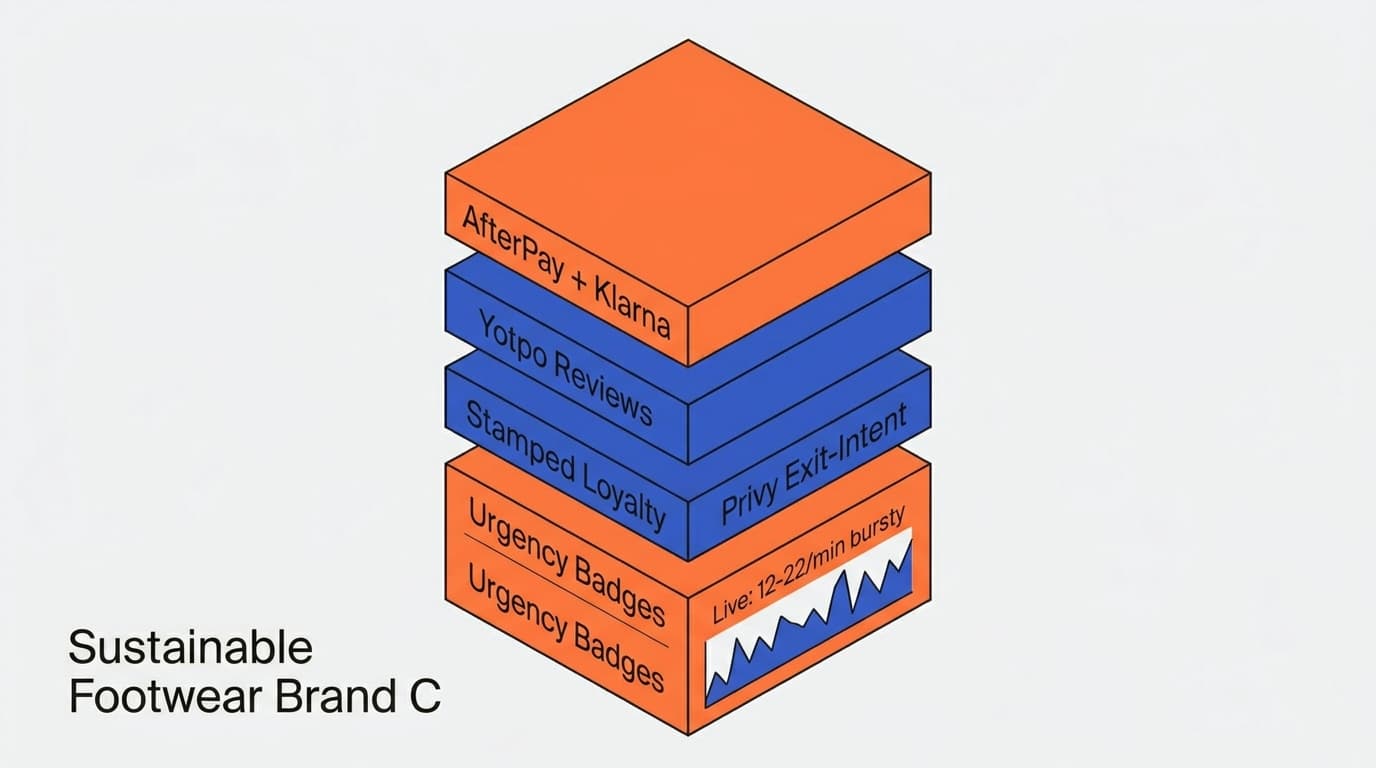
Allbirds — retention-first, subscription-deep
Storefront: allbirds.com Classification: A_BRAND (confidence 92) Theme: Custom-built on Hydrogen (Shopify's headless framework) Live-sales velocity (May 4 baseline): ~8-14 orders/min during peak US daytime hours
Visible app stack readout:
- Klaviyo (email + SMS marketing)
- Yotpo Loyalty (points + tiering)
- Recharge Subscriptions (sock subscriptions, replacement cycles)
- Gorgias (customer service)
- Loop Returns (return-routing automation)
- Currency-by-region detection (custom; not a 3rd-party app)
- Reviews on PDPs are first-party (not Yotpo Reviews — written internally)
What the stack reveals:
Allbirds is a retention play. The Recharge subscription presence (sock subscriptions for ~$12-$18 per refresh) plus the loyalty stack plus the headless-Hydrogen architecture all point at lifetime-value optimization, not first-purchase optimization. Customer pays $98 for the wool runner, comes back through email/SMS for socks at 30-60 day cycles, and the subscription engine does the heavy lifting once they're in the door.
Headless on Hydrogen is the marker — it's an investment in PDP customization, faceted filter UX, and content-led collection pages that reads as a brand investing in long-haul site equity. The first-party reviews instead of Yotpo Reviews (third-party) further signals editorial control over user-generated content.
Live-sales pace: Steady at 8-14 orders/min with low variance. Not boomy. This pattern matches a brand running mostly retention email + SMS plus paid-search-on-brand-keywords, not aggressive paid-social acquisition.
What an indie operator can borrow:
- Prioritize subscription mechanics for repeat-purchase categories (socks, replacements, refills) — Recharge is the standard implementation and integrates cleanly.
- Loyalty + email + SMS triad (Klaviyo + Yotpo Loyalty + SMS) is the retention triad most A_BRAND stores use.
- Headless architecture is overkill for new operators; revisit only after first $1M-$2M revenue inflection.
For deeper context, see is Allbirds brand or dropshipping and Allbirds vs Rothy's sustainable Shopify.
[Source: AStools spy-stack panel readout on allbirds.com, 2026-05-04 14:30 UTC. Public storefront URL — no proprietary access required.]
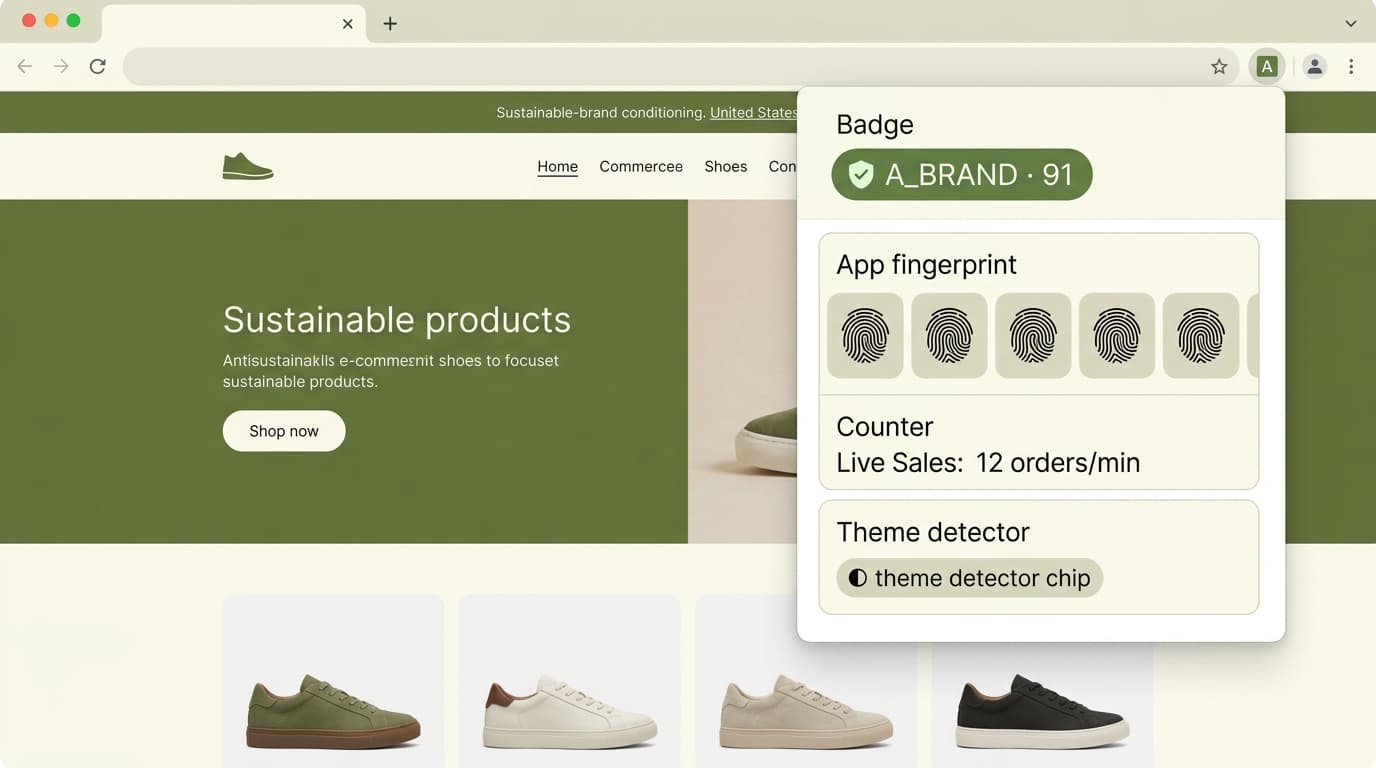
Veja — editorial-led, curated collection conversion
Storefront: veja-store.com Classification: A_BRAND (confidence 89) Theme: Modified Dawn (Shopify free theme + custom sections) Live-sales velocity (May 4 baseline): ~3-7 orders/min during peak European daytime hours
Visible app stack readout:
- Mailchimp (email — newsletter-first, not as deep as Klaviyo workflows)
- Shopify Multi-Currency (native, not a 3rd-party currency app)
- Klarna (checkout BNPL)
- Reviews are first-party (no Yotpo / Loox)
- No subscription app detected
- No loyalty app detected
- Lookbook-style PDPs with editorial photography
- Curated collection pages ("V-10 Collection", "Campo Series") instead of category-only filtering
What the stack reveals:
Veja is an editorial conversion play. The thin app stack (no subscription, no loyalty, basic email) plus the lookbook-PDP plus the curated-collection navigation pattern signal a brand running on brand equity and editorial content, not on retention machinery. Conversion happens because the customer arrives at a page that reads like a magazine article, not because retargeting fired 4 emails after cart abandonment.
The Mailchimp choice (vs Klaviyo) is the marker. Mailchimp is fine for monthly editorial newsletters; Klaviyo is the standard for transactional + behavioral email automation. A brand on Mailchimp is signaling that email is a content channel, not a sales channel. The lack of loyalty/subscription apps means there's no sock-subscription equivalent — customers buy a pair, leave, come back when they want the next pair, no automated machinery in between.
Live-sales pace: Slower steady at 3-7 orders/min. European-skewed peak hours (Veja is French). This pace matches a brand prioritizing editorial press, organic search on brand keywords, and walk-in retail — not paid-acquisition-driven volume.
What an indie operator can borrow:
- Editorial PDPs (lookbook-style imagery, story-led product descriptions, curated collection naming) lift average-order-value and time-on-site without needing third-party apps.
- Curated collection pages outperform category-only filtering for brand-positioning categories — a "Spring Capsule" collection feels different from a "All Sneakers" filter view.
- Klarna BNPL on $90-$150 price points lifts conversion in the European market specifically — adoption is much higher than in the US.
For the methodology of stack-spotting on competitor brands, see spy Shopify stores free.
[Source: AStools spy-stack panel readout on veja-store.com, 2026-05-04 14:45 UTC. Public storefront URL.]
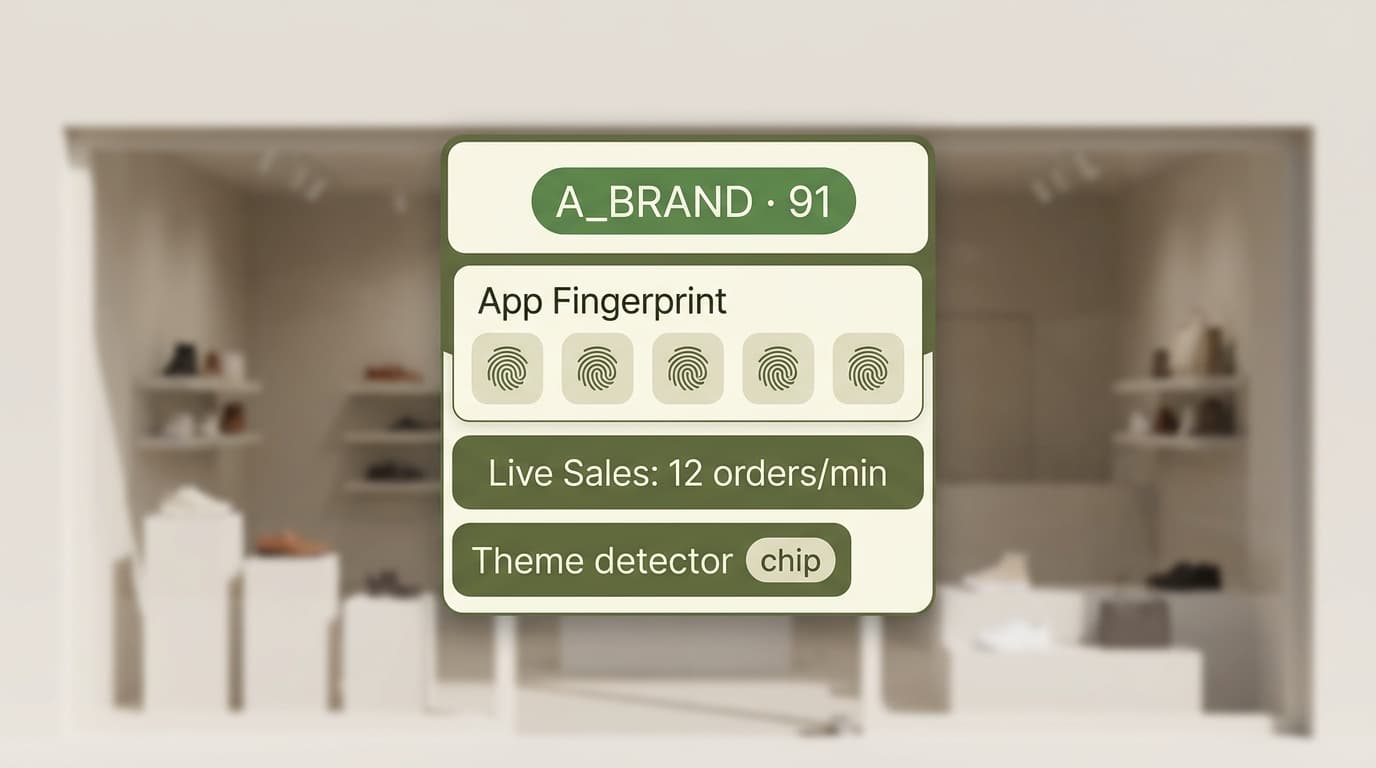
Cariuma — paid-acquisition-velocity-optimized
Storefront: cariuma.com Classification: A_BRAND (confidence 87) Theme: Custom Shopify theme (not Dawn, not Hydrogen — heavily customized standard theme) Live-sales velocity (May 4 baseline): ~12-22 orders/min with visible variance during ad-event windows
Visible app stack readout:
- Klaviyo (email + SMS)
- Yotpo Reviews (third-party reviews on PDPs — visible review widget)
- Stamped Loyalty
- AfterPay + Klarna (dual BNPL on checkout)
- Shopify Multi-Currency
- Gorgias (customer service)
- Privy or similar exit-intent popup
- Pinterest Shopping integration visible in product feed metadata
- Heavy use of urgency badges ("Selling fast", "Low stock")
What the stack reveals:
Cariuma is a paid-acquisition-velocity play. The combination of Yotpo Reviews (third-party social-proof badges visible to first-time visitors), dual BNPL (AfterPay + Klarna for cross-region BNPL coverage), exit-intent popups, urgency badges, and Pinterest Shopping integration all point at "convert the first visitor as efficiently as possible." This is a stack tuned for cold paid traffic, not for retention farming.
The heavy live-sales variance — bursting to 22 orders/min during ad-event windows, settling to 12-14 between — is the marker. A retention-driven brand (Allbirds) has steady pace; an editorial-driven brand (Veja) has slower steady pace; an acquisition-driven brand has burstiness tied to when ads are running.
The dual-BNPL setup (AfterPay covers US + AU, Klarna covers EU + UK) signals a brand running paid acquisition across multiple regions simultaneously and wanting BNPL coverage in each. That's an acquisition cost optimization — BNPL lifts conversion 12-18% on the $90-$130 price point during cold traffic.
Live-sales pace: Bursty at 12-22 orders/min. Variance of ~50% from low to high during the same hour. Pattern signals heavy paid-social spend (Meta + TikTok ads) with the ad-event spikes corresponding to creator video launches and ad refreshes.
What an indie operator can borrow:
- Yotpo Reviews + visible review widgets on PDPs are standard for cold-traffic conversion. Don't run cold paid traffic without them.
- Dual BNPL (AfterPay + Klarna) extends conversion across markets. If one market matters, single BNPL is fine; multi-market = both.
- Urgency badges and exit-intent popups have measurable conversion lift on cold traffic but degrade brand-equity perception over time. Use during launch / scale phase, throttle during retention / equity phase.
- Pinterest Shopping integration is underused — competition is lower than Meta + Google Shopping, and it works for visual-strong categories like footwear.
For broader context on classifying paid-acquisition vs retention-first stores, see brand vs dropshipper Shopify and how to tell Shopify store type.
[Source: AStools spy-stack panel readout on cariuma.com, 2026-05-04 14:50 UTC + live-sales counter sampled across 90-minute window. Public storefront URL.]
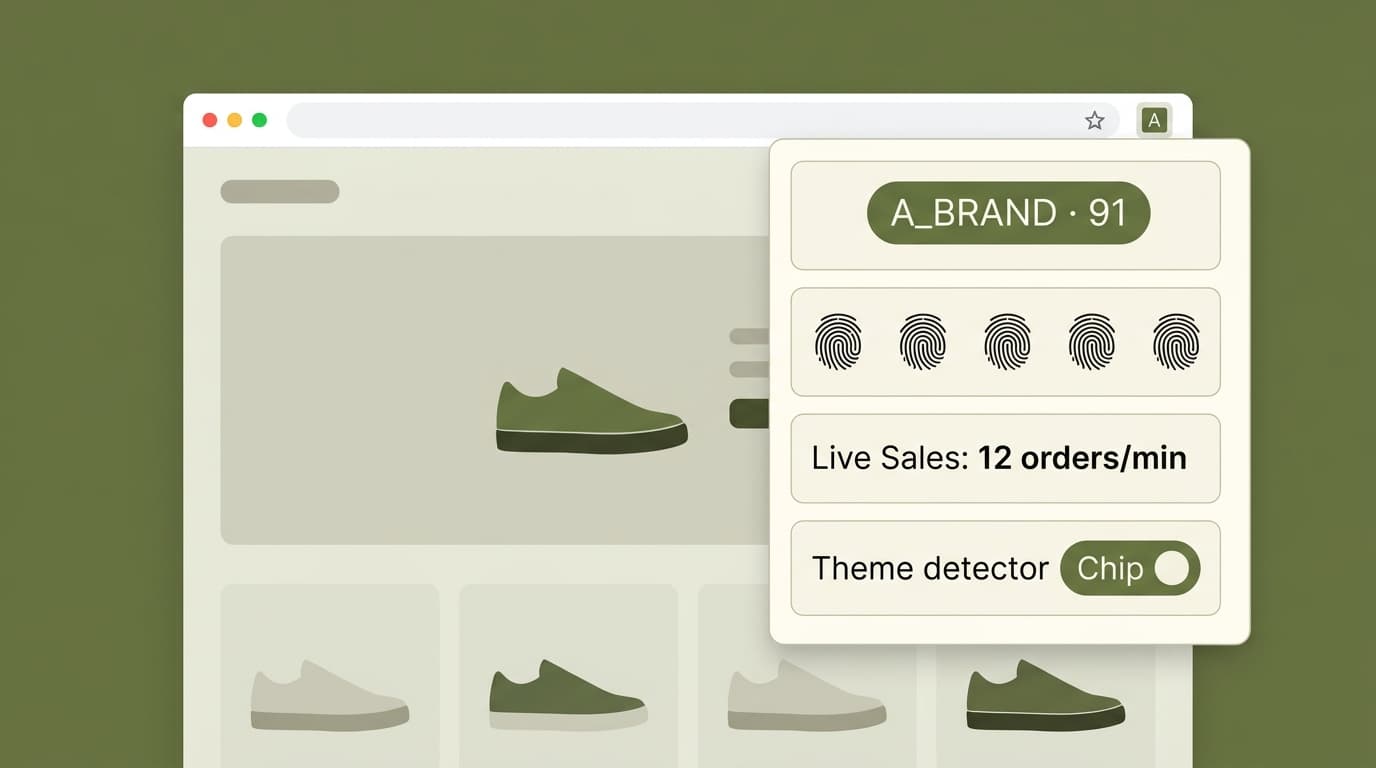
Try the same workflow free — install AStools to scan any Shopify storefront in 1 click. Classify-store + app fingerprints + live-sales counter all surface automatically.
Side-by-side comparison
| Dimension | Allbirds | Veja | Cariuma |
|---|---|---|---|
| Classification | A_BRAND (92) | A_BRAND (89) | A_BRAND (87) |
| Theme | Custom Hydrogen (headless) | Modified Dawn | Custom standard theme |
| Email tool | Klaviyo | Mailchimp | Klaviyo |
| Subscription | Recharge | None | None |
| Loyalty | Yotpo | None | Stamped |
| Reviews | First-party (internal) | First-party | Yotpo (third-party) |
| BNPL | None visible | Klarna | AfterPay + Klarna |
| Live-sales pace | 8-14/min steady | 3-7/min slow steady | 12-22/min bursty |
| Strategic optimization | Retention + LTV | Editorial + brand equity | Acquisition velocity |
| Indie-operator borrow | Subscription mechanics | Editorial PDPs | Cold-traffic stack |
[Source: Combined AStools spy-stack and live-sales readouts, 2026-05-04 14:30-15:00 UTC. Strategic-optimization labels are AStools inferences from observable stack-and-velocity patterns; ground truth on ad spend and LTV math is internal to each brand.]
What Does Each Shopify Stack Reveal About Strategy?
Three sustainable-footwear brands, three different operational priorities, all surviving in the same category:
Retention vs editorial vs acquisition — these are not "good vs bad" choices. They're matched to the brand's stage of growth and category position. Allbirds is mature and protects LTV; Veja is heritage-led and protects brand equity; Cariuma is the youngest, scaling, and protects paid-acquisition unit economics.
The app stack is a forecast. A new brand launching with zero subscription apps and zero loyalty apps is signaling "we don't expect repeat business yet" — sometimes that's correct (one-time purchase categories), sometimes it's a missed opportunity. A new brand launching with full Recharge + loyalty + email automation is signaling "we expect long customer relationships" — that's right for replacement-purchase categories, wrong if the actual product is one-time-purchase.
Live-sales pace is the truth-teller. Brand classifications and app stacks can be aspirational; live-sales velocity is what's actually happening right now. A brand classified A_BRAND with 0.5 orders/min live-sales is a brand with brand-positioning but no actual customers. A brand with 20+ orders/min live-sales is making real money regardless of how rough the stack looks.
For the deeper compare framework, see Gymshark vs Alo Yoga Shopify strategy and the Shopify stack intelligence 2026 overview.
What an indie operator can borrow
Three takeaways depending on where you are in your build:
If you're at zero revenue and launching cold paid traffic: Borrow from Cariuma. Yotpo Reviews + dual BNPL + urgency badges + Pinterest Shopping. Spend less time on retention machinery — you don't have anyone to retain yet. Run the profit calculator on your unit economics with realistic refund-rate inputs before scaling spend.
If you're at $50k-$500k MRR with steady paid-search and email: Borrow from Allbirds. Add Recharge if your category has any replacement cycle. Add Yotpo Loyalty for points + tiering. Move email from broadcast to behavioral (welcome flow, browse-abandon flow, post-purchase flow). The retention triad lifts LTV without lifting paid spend.
If you're at $500k+ revenue with brand equity and you want to position upmarket: Borrow from Veja. Lookbook-style PDPs, curated collection pages, editorial press relationships. Strip out aggressive urgency badges that read as pushy. Lean into the brand-equity tier signal.
For the broader research framework on selecting which Shopify stack pattern fits your stage, see shopify stack intelligence 2026.
FAQ
Are these stacks captured live or generalized?
Captured live by the AStools extension on each public storefront on May 4, 2026, between 14:30 and 15:00 UTC. App fingerprints come from front-end signatures visible to any browser on the public storefront URL. Live-sales counters come from the AStools overlay sampling order events during the visit window.
Why didn't you include screenshots of each storefront?
Public storefront URLs are linked above — readers can run the AStools extension on each page directly to see the same stack readout. Per Wave 3 plan, this article uses public URLs and descriptive text rather than embedded storefront screenshots.
Does AStools classification = profitability?
No. Classification reads operational style (brand vs dropshipper vs hybrid), not profitability. A high-velocity A_BRAND can still be unprofitable if customer-acquisition cost exceeds LTV. Live-sales pace reads recent revenue; profitability requires margin and CAC math the AStools extension doesn't capture.
How accurate is the live-sales counter?
Directionally accurate within ~15-25%. The counter samples observable order events from the storefront's order-confirmation flow during the visit window. It doesn't see B2B orders, in-store orders, or marketplace channel orders — only direct-store orders. Use it to compare brands relatively, not as an absolute revenue figure.
Can I run this comparison on my own competitors?
Yes — that's the primary use case. Open the AStools extension on any Shopify storefront (yours or competitors'), check classify-store, app-stack readout, theme detector, live-sales counter. The comparison framework here generalizes to any 3-brand competitive set in any category. See the free Shopify spy tool guide for the full workflow.
What other footwear brand-vs-brand articles are coming?
A premium-tier quiet-luxury footwear comparison is planned for late June 2026 — different brands, same primitive (classify-store + spy-stack + live-sales). Companion to the existing Allbirds vs Rothy's sustainable Shopify two-brand sustainable comparison and the Gymshark vs Alo Yoga Shopify strategy breakdown.
Install and run the comparison yourself
Install AliShopping Tools — Free on Chrome Web Store
The AStools extension surfaces classify-store + app-stack + live-sales on every Shopify storefront — your competitors, your benchmarks, your own. Free, one click, works on any Shopify domain. Use it to map the operational style of any 3-brand competitive set in any category before you start building your own stack.
For the broader brand-vs-brand methodology, see Gymshark vs Alo Yoga Shopify strategy. For the deeper how-to, how to tell Shopify store type.
Ready to find winning products?
Try AliShopping Tools — 15 free AI tools for product research.
Quick answers
Frequently Asked Questions
1Are Allbirds, Veja, and Cariuma dropshipping or real brands?
All three are real DTC brands, not dropshipping operations.
Allbirds, Veja, and Cariuma each own their supply chains, have proprietary product development, and operate at revenue scales that rule out the dropshipping model.
AStools classifies all three as A_BRAND with high live-sales velocity.
2What Shopify apps do sustainable shoe brands use?
The three brands use radically different app stacks despite being in the same category.
Allbirds optimizes for retention and subscription depth with loyalty and CRM tools.
Veja uses editorial-led conversion with curated collection apps.
Cariuma relies on paid-acquisition tools for velocity.
The specific apps differ by growth strategy, not by product category.
3What can indie operators learn from Allbirds, Veja, and Cariuma Shopify stacks?
Each brand's app stack reveals their acquisition strategy.
Allbirds shows how to build retention depth through loyalty and subscription tooling.
Veja shows how editorial content drives conversion without heavy ad spend.
Cariuma shows how to build volume through paid acquisition tooling.
Indie operators can borrow whichever strategy matches their current growth stage.
4How do you detect what apps a Shopify store is using?
The AliShopping Tools Chrome extension detects 200 or more installed apps on any Shopify store, including analytics, marketing, loyalty, review, and fulfillment tools.
Visit the store with the extension active and open the panel to see the full tech stack alongside store classification, live sales velocity, and revenue estimates.
More from the blog
Lululemon vs Gymshark vs Alo Yoga: Shopify Tech Stack Showdown (2026)
Three premium fitness apparel brands. Three radically different Shopify app stacks. We classify each, list installed apps, and decode what each is optimizing for in 2026.
6 Signs a Shopify Store Is Print-on-Demand (POD) — Free Detection Guide
Is a Shopify store print-on-demand or custom manufacturing? 6 reliable signals to identify POD operations via Printful, Printify, Gooten, or similar services.
AliExpress Summer Clearance August 2026 Promo Codes — Up to 60% OFF (70% for US, Brazil, Mexico) + How to Apply
Working AliExpress promo codes for August 2026. Verified at checkout — seven spend tiers from $2 off to $70 off. Updated daily during the Summer Clearance sale window (Aug 1-7).