
AliExpress vs DHgate Wholesale 2026: Which Is Better?
Quick answer: DHgate is the stronger platform for wholesale bulk orders with tiered pricing tiers and custom product requests at low MOQs. AliExpress is better for single-unit dropshipping, retail buyers, and stronger dispute resolution. For most new dropshippers, AliExpress is the safer starting platform; DHgate adds value at higher order volumes needing bulk pricing. Install AliShopping Tools on the Chrome Web Store →
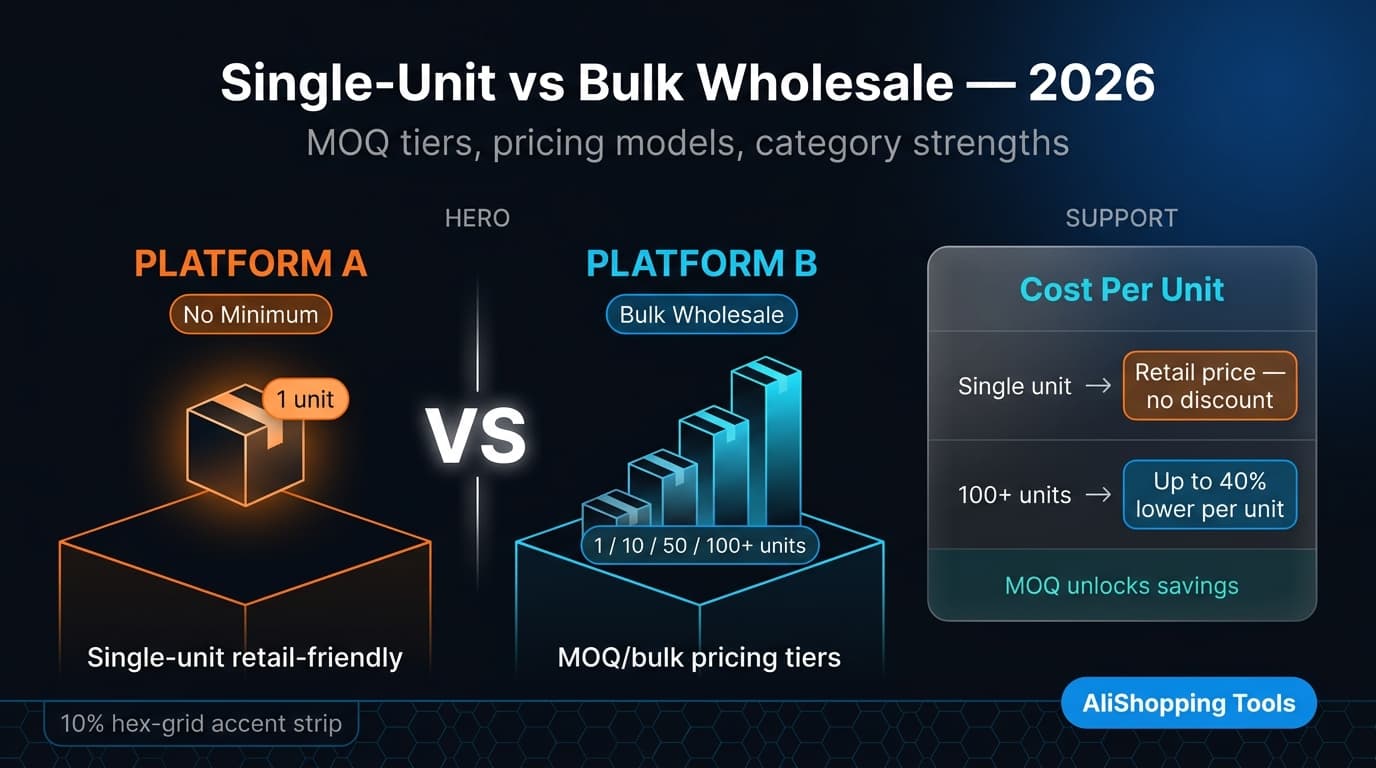
AliExpress and DHgate are both Chinese-sourced marketplace platforms, but they serve fundamentally different buying intents. AliExpress is built around single-unit retail and dropshipping. DHgate is oriented toward bulk wholesale, tiered pricing, and custom product sourcing — sitting between Alibaba (factory minimums) and AliExpress (pure retail).
Understanding that structural difference is the key to choosing the right platform for your use case in 2026.
AliExpress vs DHgate: Which Is Better for Wholesale?
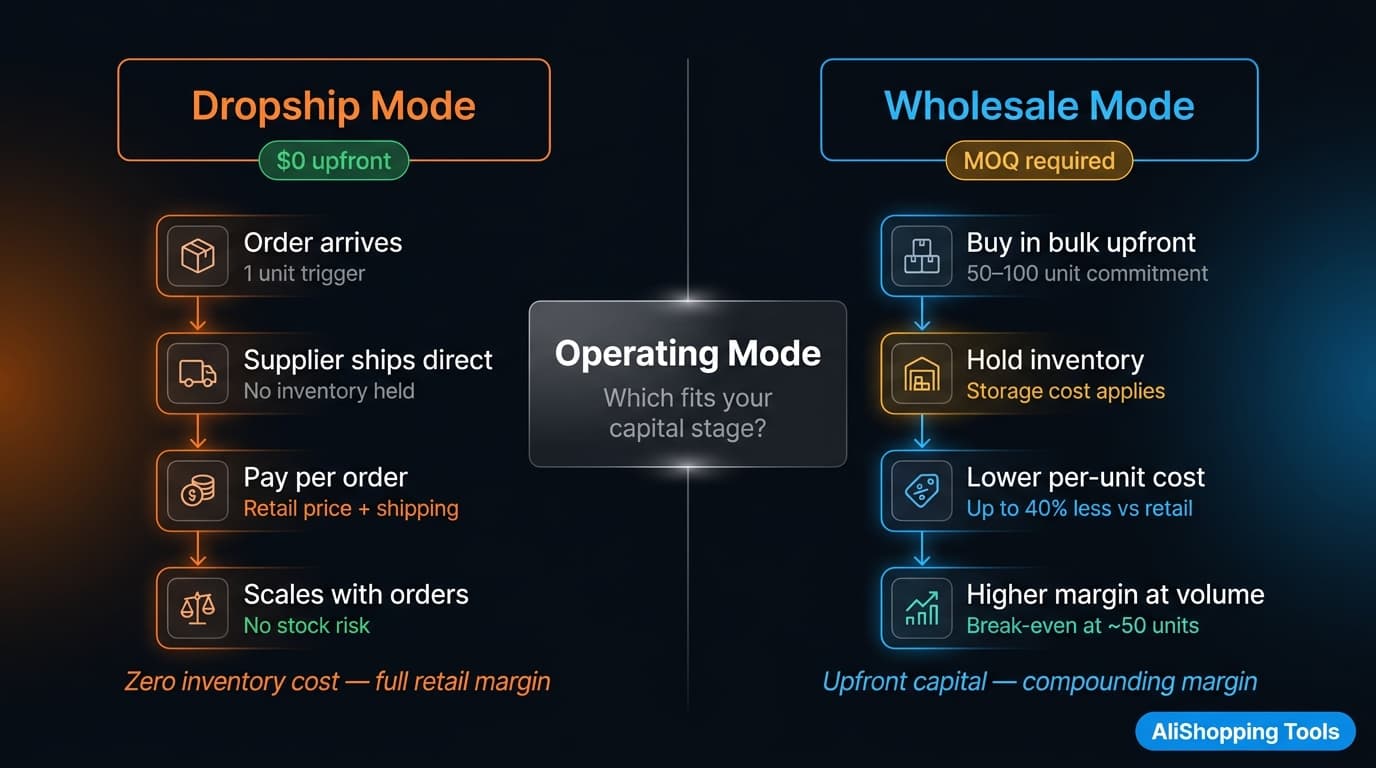
For true wholesale (bulk quantities with per-unit cost decreases), DHgate is generally stronger. Most DHgate listings are structured with visible bulk pricing tiers — for example, 1–9 units at one price, 10–49 units at a lower price, 50+ units at the wholesale floor.
AliExpress does have some wholesale-oriented sellers, but the platform's design optimizes for single-unit retail discovery. Bulk pricing on AliExpress tends to be negotiated via seller messaging rather than published in listing tiers.
Summary: DHgate for bulk wholesale. AliExpress for single-unit retail and dropshipping.
Minimum Order Quantities (MOQs): The Key Difference
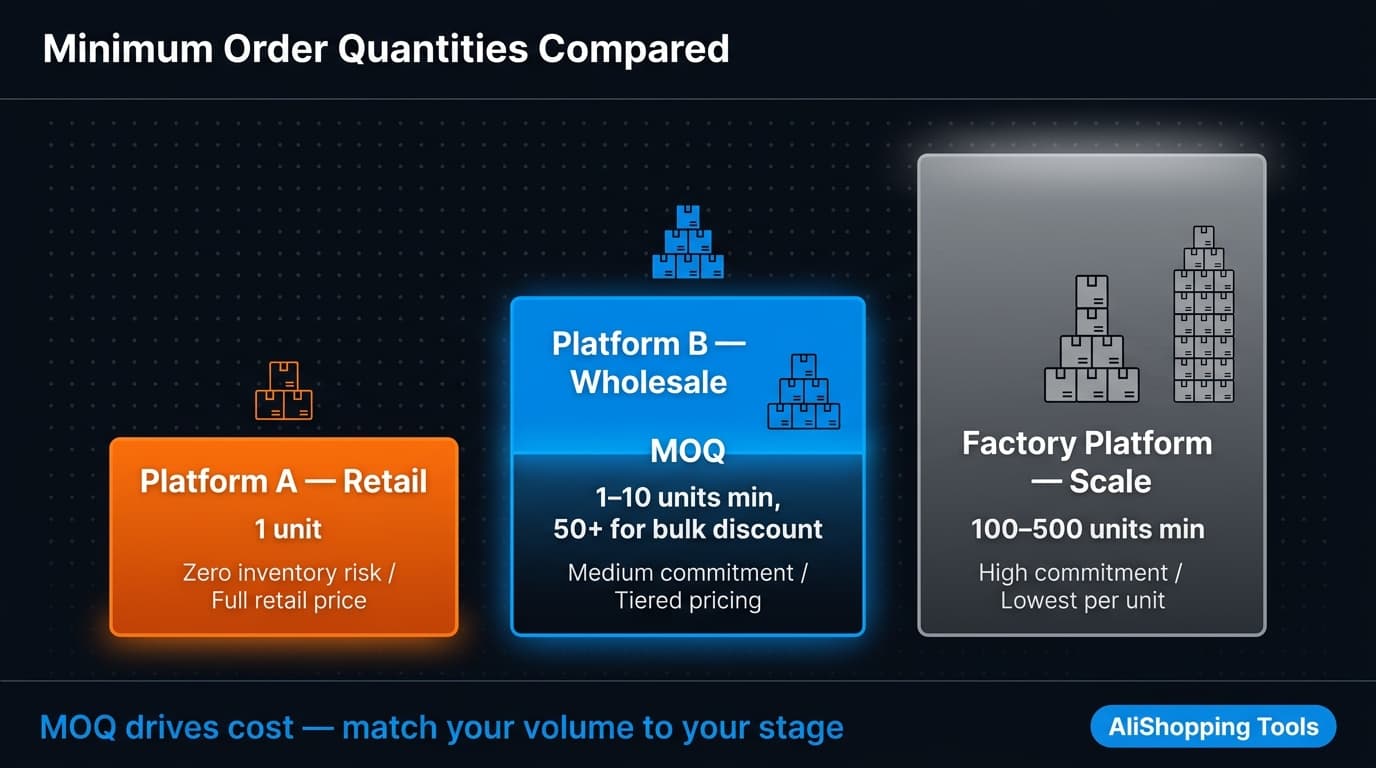
DHgate's MOQ advantage over Alibaba is significant: while Alibaba factories often require 100–500 unit minimums, DHgate suppliers frequently accept orders as low as 1–5 units, with tiered pricing that scales to 10, 50, and 100+ unit brackets.
| Platform | Typical MOQ | Bulk Pricing |
|---|---|---|
| AliExpress | 1 unit (standard) | Rarely available |
| DHgate | 1–5 units (standard) | Tiered (10/50/100+ brackets) |
| Alibaba | 100–500 units (typical) | Full factory wholesale |
This makes DHgate particularly attractive for buyers who want some of the cost structure of wholesale buying without committing to Alibaba-scale minimums. You can order 25 units of a product at a meaningfully lower per-unit price than AliExpress single-unit pricing.
For pure single-unit dropshipping, AliExpress's MOQ model is more practical — no need to hold inventory or negotiate order sizes.
Pricing: Per-Unit vs Bulk Tiers
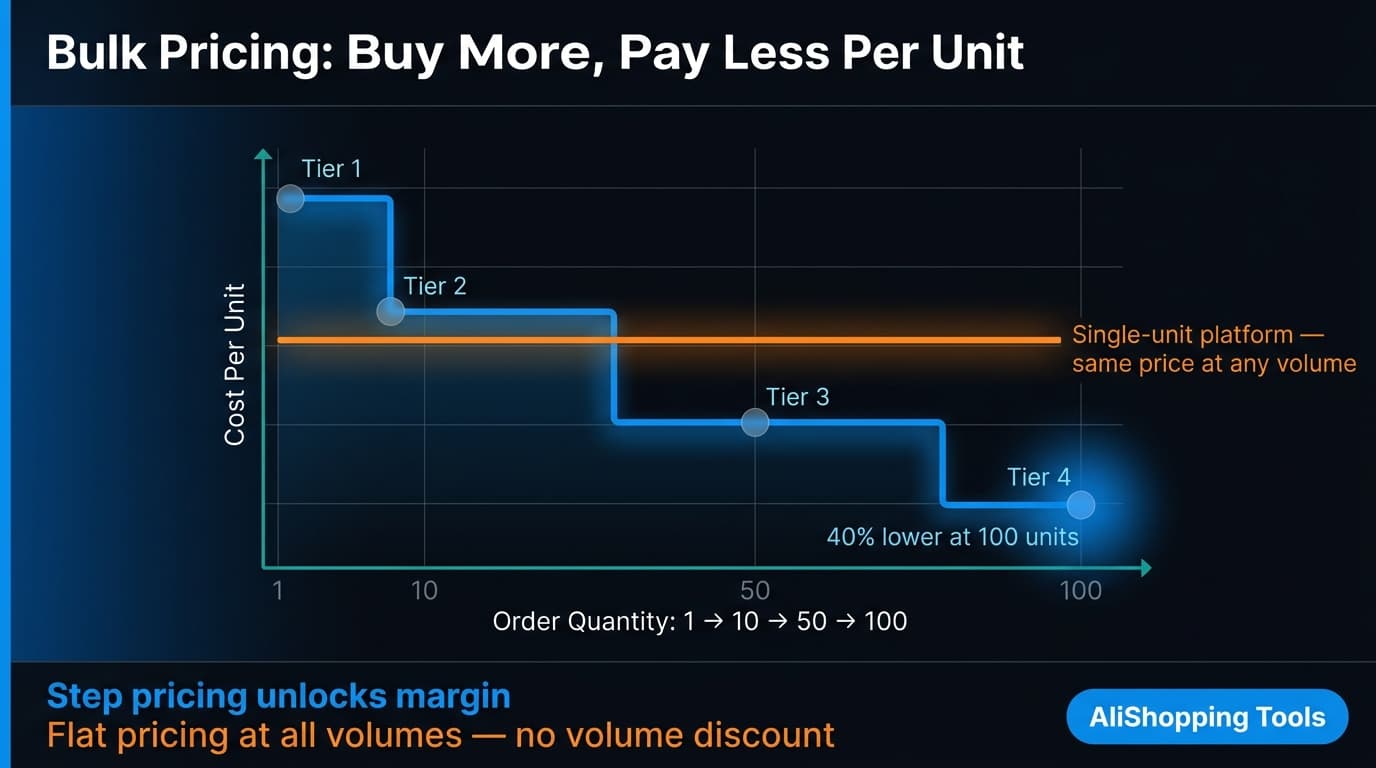
AliExpress pricing is transparent and primarily per-unit. What you see on the listing is what you pay. Discounts come through seller coupons and platform promotion codes (especially during major sale events like 618), not through quantity brackets.
DHgate pricing is structured for bulk. A typical DHgate listing might show:
| Quantity | Price Per Unit |
|---|---|
| 1–9 | $8.50 |
| 10–49 | $7.20 |
| 50–99 | $6.10 |
| 100+ | $5.40 |
The per-unit savings at 50+ units are substantial — often 30–40% below single-unit price. For resellers buying consistent volume in a stable niche, this pricing structure generates meaningful margin expansion.
AliExpress price monitoring via AliShopping Tools helps you benchmark DHgate bulk prices against AliExpress single-unit pricing, which tells you how much premium you are paying for the convenience of single-unit ordering.
Product Categories: Where Each Platform Wins
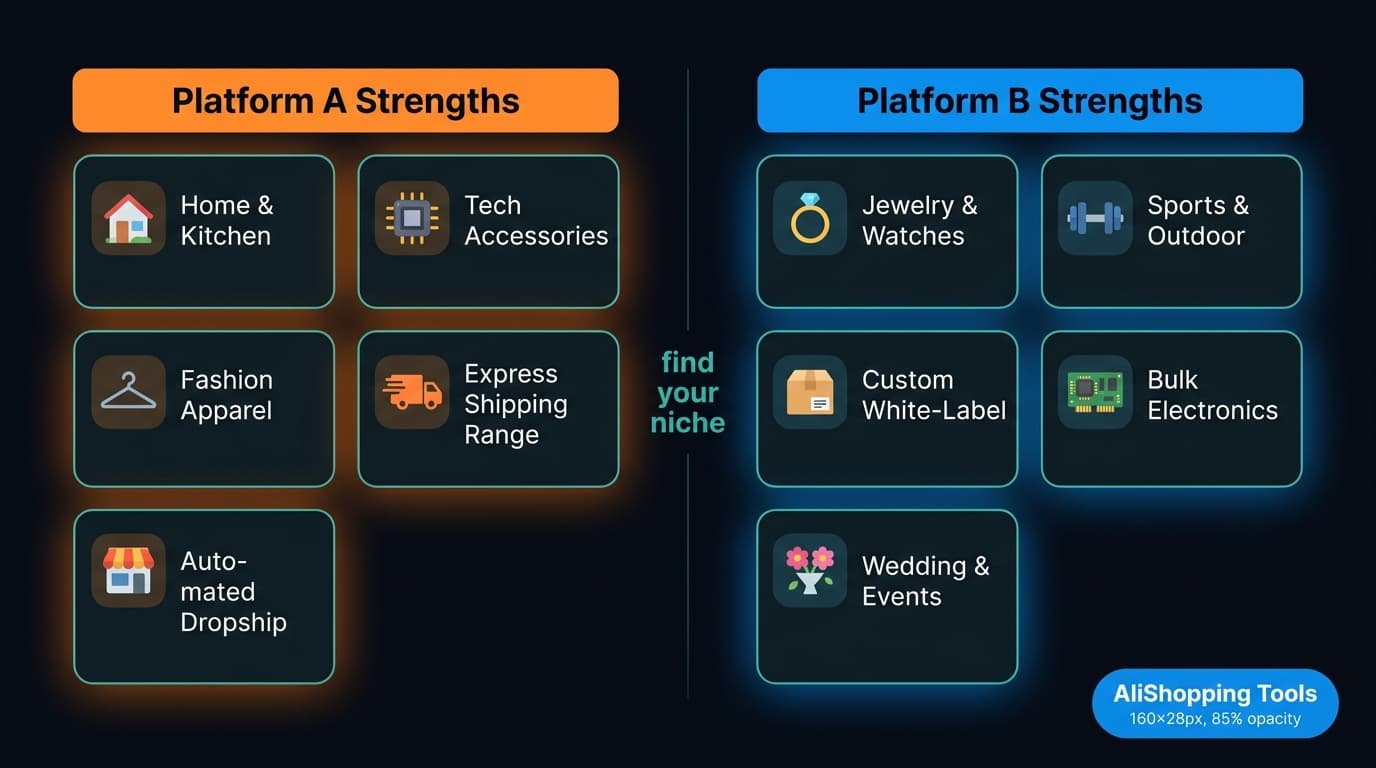
DHgate is stronger for:
- Jewelry, fashion watches, and accessories (huge catalog, low MOQ custom options)
- Sports and outdoor gear (especially unbranded/white-label)
- Electronics components and peripherals (at bulk pricing)
- Custom/white-label products (DHgate suppliers frequently accept custom requests at 20–50 unit minimums)
- Wedding and event supplies (bulk pricing makes unit economics work)
AliExpress is stronger for:
- Home goods, decor, and kitchen products
- Fashion and apparel (single-unit dropship)
- Tech accessories (phone cases, cables, gadgets)
- Anything where the AliExpress Choice program applies (pre-stocked, faster shipping)
- Niche and long-tail products (larger overall catalog)
Both platforms overlap heavily in electronics, fashion, and home goods. The meaningful difference is in whether you need bulk pricing and custom capabilities (DHgate advantage) or catalog depth and retail polish (AliExpress advantage).
Shipping Options and Timelines
Both platforms ship primarily from China, with similar shipping methods available.
| Shipping Method | DHgate | AliExpress |
|---|---|---|
| Standard shipping to US | 15–25 days | 15–25 days |
| Expedited (DHL/FedEx) | Available (seller-dependent) | Available |
| Choice / pre-stocked | Not available | Available (7–12 days US) |
| Tracking coverage | Variable by seller | Generally strong |
AliExpress has a structural advantage here via the Choice program: a subset of popular products is pre-stocked in regional warehouses and ships in 7–12 days to the US and EU. DHgate does not have an equivalent program as of June 2026.
For bulk wholesale orders where longer lead times are acceptable (because you are ordering stock, not dropshipping on demand), DHgate's standard shipping timelines are not a significant disadvantage.
For detailed AliExpress shipping timeline breakdowns by country and shipping method, see the AliExpress shipping time calculator guide.
Buyer Protection and Dispute Resolution
AliExpress has a more robust and better-documented buyer protection system. AliExpress's dispute resolution process is formalized: buyers can open a dispute within a defined window after the estimated delivery date, providing order evidence, and AliExpress mediates. Seller ratings and feedback are prominently displayed, and platform-level accountability is high.
DHgate has buyer protection policies, but enforcement is less consistent. Dispute resolution can be slower, and seller accountability varies more widely. For higher-value or first-time orders with new DHgate suppliers, it is advisable to start with smaller test orders.
For new buyers: AliExpress's dispute system is more straightforward. If you are sourcing from a supplier for the first time, AliExpress provides better protection infrastructure.
Does DHgate Work for Dropshipping?
DHgate is usable for dropshipping, but it is not the platform's primary design intent. Key limitations:
- No native dropshipping app: DHgate does not have a Shopify-equivalent native integration. Dropshipping workflows require manual order processing or third-party tools.
- Less automation: Order routing, fulfillment tracking, and inventory sync require more manual management than AliExpress + DSers.
- Shipping times: Standard DHgate shipping is comparable to AliExpress standard — 15–25 days to the US. Without a Choice-equivalent program, faster options require premium shipping at higher cost.
Where DHgate works well for dropshipping: products where bulk pricing provides a meaningful unit cost advantage that lets you offer competitive retail pricing. If you identify a DHgate product 30% cheaper per unit than AliExpress equivalents at your needed volume, the margin improvement may justify the additional operational friction.
Does AliExpress Work for Dropshipping?
Yes — AliExpress is the world's most widely used dropshipping source platform. The combination of single-unit ordering, DSers (official automation partner), and AliShopping Tools for supplier vetting and Shopify import makes it a complete dropshipping infrastructure.
AliExpress's strengths for dropshipping:
- Single-unit ordering as default (no MOQ negotiation)
- DSers for automated order routing to Shopify
- AliExpress Choice for faster shipping on proven products
- Large seller ecosystem with visible ratings, reviews, and order counts
- AliShopping Tools v23 for one-click product import to Shopify
For a full comparison of dropshipping platform options including Zendrop and CJ Dropshipping, see the Ultimate AliExpress vs All Platforms Guide 2026.
When to Use DHgate vs AliExpress
| Scenario | Better Choice |
|---|---|
| Testing a new niche with single units | AliExpress |
| Scaling a proven SKU at 50+ unit volumes | DHgate |
| Custom/white-label product at low MOQ | DHgate |
| Fastest possible shipping to US customers | AliExpress Choice |
| Jewelry, watches, accessories in bulk | DHgate |
| Building a fully automated Shopify store | AliExpress + DSers |
| Comparison shopping unit economics | Both (benchmark against each other) |
Install AliShopping Tools on the Chrome Web Store →
FAQ
Is DHgate cheaper than AliExpress for wholesale?
DHgate is typically cheaper than AliExpress at bulk quantities (10+ units) because of tiered bulk pricing. For single-unit orders, AliExpress and DHgate are comparable in price, though AliExpress often has more competitive single-unit pricing due to higher seller competition in many categories. The DHgate advantage emerges clearly at 50–100+ unit orders.
Can you use DHgate for dropshipping?
Yes, but DHgate is not optimized for it. DHgate lacks a native Shopify dropshipping app, and fulfillment automation requires manual workflows or third-party tools. For new dropshippers, AliExpress (with DSers) is easier to set up and automate. DHgate suits dropshippers who need bulk pricing advantages and are willing to invest in manual order management or custom tool integrations.
What is the minimum order on DHgate?
Most DHgate listings accept orders starting at 1–5 units, making DHgate accessible for small initial orders. The key difference from AliExpress is that DHgate listings typically show tiered bulk pricing — you pay a higher per-unit price at 1–5 units and lower prices at 10+, 50+, and 100+ unit brackets. AliExpress standard is single-unit pricing with no tier structure.
Is DHgate safe to buy from?
DHgate is a legitimate B2B/B2C marketplace with a real buyer protection system, but enforcement is less consistent than AliExpress. Best practices: check seller ratings and transaction history, start with small test orders from new suppliers, use DHgate's dispute system if an order fails, and pay via secure methods (credit card, PayPal where available) for chargeback protection.
What sells well on DHgate?
DHgate's strongest categories are jewelry and fashion accessories, watches, sportswear and outdoor gear, electronics accessories, custom/white-label items, and wedding supplies. These categories benefit most from DHgate's bulk pricing tiers and low-MOQ customization options.
What is the difference between DHgate and Alibaba?
Both are wholesale-oriented Chinese B2B platforms, but DHgate has meaningfully lower MOQs. Alibaba typically requires factory-level minimums (100–500+ units) and is suited for large import orders. DHgate accepts orders starting at 1–5 units with bulk pricing beginning at 10–50 units — it sits between Alibaba (true factory wholesale) and AliExpress (pure retail/dropship).
AliShopping Tools
See live AliExpress data in your browser.
Seller trust score, 90-day price history, and live promo codes — on every AliExpress product page. No account, free.
Ready to find winning products?
Try AliShopping Tools — 15 free AI tools for product research.
Quick answers
Frequently Asked Questions
1Is DHgate cheaper than AliExpress for wholesale orders?
DHgate is typically cheaper than AliExpress at bulk quantities (10+ units) due to tiered bulk pricing structures.
For single-unit orders, AliExpress often has more competitive pricing due to higher seller competition.
The DHgate price advantage becomes significant at 50–100+ unit orders, where per-unit cost can be 30–40% below single-unit pricing.
2Can you use DHgate for dropshipping?
Yes, but DHgate is not optimized for dropshipping.
It lacks a native Shopify dropshipping app, and order fulfillment requires manual workflows or third-party tools.
For most new dropshippers, AliExpress with DSers is easier to set up and automate.
DHgate suits dropshippers who need bulk pricing advantages and accept more manual order management.
3What is the minimum order quantity on DHgate?
Most DHgate listings accept orders starting at 1–5 units, making it accessible for small test orders.
The key difference from AliExpress is DHgate's tiered pricing — you pay a higher per-unit price at 1–5 units and progressively lower prices at 10+, 50+, and 100+ unit brackets.
AliExpress uses flat single-unit pricing with no tier structure.
4Which platform has better buyer protection: AliExpress or DHgate?
AliExpress has a more robust and consistently enforced buyer protection system.
Its dispute resolution process is formalized with clear timelines and platform-level mediation.
DHgate has buyer protection policies, but enforcement is less consistent.
For first-time orders with new suppliers, AliExpress provides better protection infrastructure.
5What is the difference between DHgate and Alibaba?
Both are wholesale-oriented B2B platforms, but DHgate has significantly lower minimum order quantities.
Alibaba typically requires factory-level minimums of 100–500+ units for custom production.
DHgate accepts orders starting at 1–5 units with bulk pricing from 10–50 units — it sits between Alibaba (true factory wholesale) and AliExpress (pure retail/single-unit dropship).
6What products are DHgate best known for?
DHgate's strongest categories include jewelry and fashion accessories, fashion watches, sportswear and outdoor gear, electronics accessories, custom and white-label items at low MOQs, and wedding and event supplies.
These categories benefit most from DHgate's tiered bulk pricing and low-MOQ customization capabilities.
7How do shipping speeds from AliExpress and DHgate compare for orders shipped to the United States?
AliExpress generally has more shipping-speed options (ePacket, Standard, and premium express) for US orders, and premium couriers like DHL Express are available on both platforms for an added fee.
DHgate's standard courier routes are generally comparable to or slightly slower than AliExpress standard shipping for similar product types, but exact transit time depends on the specific seller and warehouse location — check the estimate shown on the listing rather than a fixed day-count.
Neither platform publishes an independently audited tracking-reliability percentage.
8What are the best practices for verifying supplier credibility on DHgate versus AliExpress before placing a wholesale order?
On both platforms: check the seller's overall star rating and transaction count/history, read the buyer feedback (especially lower-starred reviews for recurring complaints), look for verified business/certification badges where the platform shows them, and place a small test order before committing to a large wholesale purchase.
Specific thresholds like a minimum star rating or transaction count are a matter of personal risk tolerance, not a platform-published rule — use your own judgment against the visible seller history.
9Can I integrate AliExpress or DHgate product feeds directly into Shopify for automated dropshipping, and what are the limitations?
AliExpress has a mature dropshipping-app ecosystem (like DSers) with inventory sync and order fulfillment built for Shopify.
DHgate integration options are less standardized and more likely to rely on third-party connectors, with sync frequency and feature depth varying by the specific app used.
Shopify's own API rate limits apply to bulk imports regardless of platform — check Shopify's current API documentation and the specific app's feature page for exact current limits rather than a fixed number.
10What are the typical return and refund processing times for wholesale purchases on AliExpress compared to DHgate?
Both platforms process refunds after the seller/platform approves the return, with the buyer generally required to submit dispute evidence (photos, tracking) within a platform-specified window.
Exact day-counts for dispute windows and refund processing vary and are shown in each platform's own buyer-protection center for the specific order — check there rather than relying on a fixed comparison.
11How do the payment security options, such as escrow and credit‑card protection, differ between AliExpress and DHgate for bulk orders?
Both platforms hold funds in an escrow-style system until the buyer confirms receipt, with a dispute window that varies by order.
Credit card chargeback rights come from your card issuer's own policy, not the marketplace, so check with Visa/Mastercard/your bank for current rules rather than a platform-specific claim.
Neither platform is documented as offering a named 'Buyer Protection Plus' tier gated on a specific inspection pass-rate — treat that kind of oddly-specific unnamed-feature claim with skepticism.
More from the blog
AliExpress vs All Platforms 2026: Ultimate Comparison
AliExpress vs Alibaba, Temu, DHgate, CJ Dropshipping, Zendrop, and Shein: 2026 guide to shipping, pricing, dropshipping, and which platform wins your use case.
AliExpress vs Zendrop Dropshipping 2026: Full Comparison
AliExpress vs Zendrop for dropshipping 2026: compare product range, shipping speed, pricing, branding, and Shopify integration to choose the right platform.
AliExpress vs CJ Dropshipping 2026: Full Comparison
AliExpress vs CJ Dropshipping 2026: catalog size, shipping speed, pricing, and Shopify integration compared. Choose the right sourcing platform for your store.